Pull Out Vs Pull Down Kitchen Faucet: Which Is Best for You?
Choosing between a pull out and pull down kitchen faucet can be confusing. These two faucet types may look similar, but they have key differences that affect convenience, cleaning power, and even kitchen style. With so many choices available today, knowing which faucet works best for your needs can save you time, money, and frustration.
This guide will help you understand the major differences, the pros and cons of each style, and which one is right for your kitchen. You’ll learn about installation, performance, durability, and small details that most buyers overlook. By the end, you’ll feel confident making an informed choice for your home.
What Is A Pull Out Kitchen Faucet?
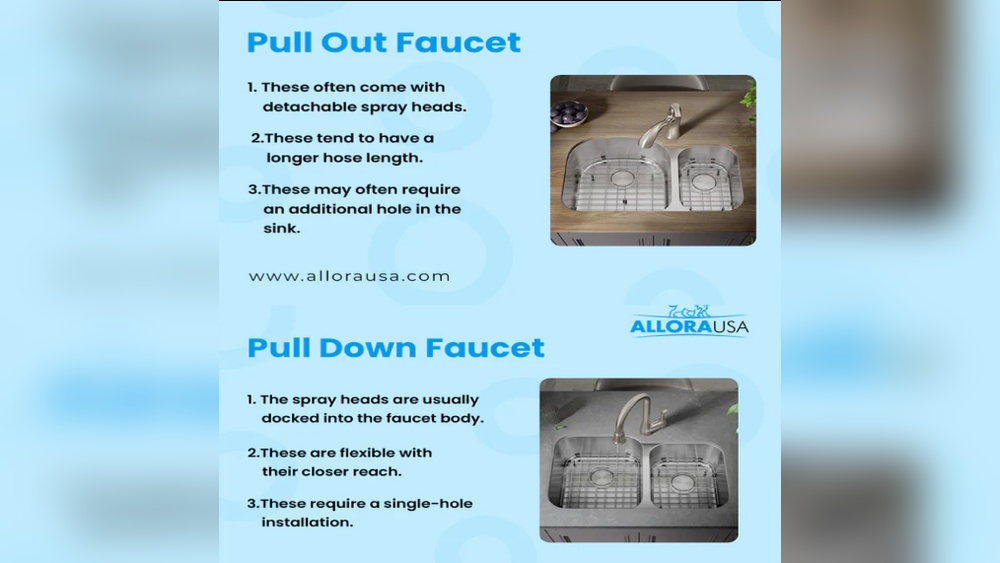
A pull out kitchen faucet has a detachable spray head that pulls straight out toward you from the faucet body. This design is usually more compact and sits lower over the sink. The hose is generally longer, giving you more reach to fill pots or clean large items on the counter beside the sink. You simply grab the head, pull it out, and direct the water wherever you need it.
Common Features
- Long hose length (up to 24 inches or more)
- Ergonomic grip, often shaped to fit comfortably in your hand
- Multiple spray modes (stream, spray, pause)
- Smooth retraction with a counterweight or magnetic docking system
Pull out faucets are popular in modern and compact kitchens. Their flexible hose and lower profile fit well under cabinets, and they offer excellent reach for cleaning corners or filling containers.
What Is A Pull Down Kitchen Faucet?
A pull down kitchen faucet has a high, curved spout—often called a gooseneck design. The spray head pulls straight down into the sink. This type gives you extra clearance, making it easy to fill tall pots or wash large pans directly under the spout. The hose is usually a bit shorter than a pull out, but the vertical movement is ideal for deep sinks and busy kitchens.
Common Features
- Tall spout height (often 8–20 inches above the counter)
- Flexible hose (usually 8–15 inches)
- Spray and stream options
- Docking mechanism to hold the spray head in place
Pull down faucets are a favorite in open, modern kitchens with deep sinks. Their high arc creates a dramatic look and makes everyday kitchen tasks more comfortable.
Key Differences Between Pull Out And Pull Down Faucets
Understanding the main differences between these two faucet types can help you decide which is better for your kitchen.
| Feature | Pull Out Faucet | Pull Down Faucet |
|---|---|---|
| Spout Height | Low to medium | Tall/gooseneck |
| Spray Head Movement | Pulled out horizontally | Pulled down vertically |
| Hose Length | Longer (up to 24 in.) | Shorter (8–15 in.) |
| Best For | Small sinks, limited space | Large/deep sinks |
| Style | Simple, compact | Modern, statement piece |
Pros And Cons Of Pull Out Kitchen Faucets
Pull out faucets have unique strengths—and a few weaknesses. Here’s what you need to know.
Advantages
- Great for Small Spaces: The lower profile fits under cabinets and in kitchens with limited space.
- Longer Reach: The hose extends farther, making it easy to fill pots on the counter or rinse big items.
- Less Splashing: The water stream is closer to the sink, so less water splashes out.
- Comfortable Grip: The handle is often shaped to fit your hand, which is helpful for users with arthritis or weak grip.
Disadvantages
- Limited Clearance: The low spout height makes it harder to fill very tall pots in the sink.
- Can Look Less Modern: Some designs look plain compared to dramatic pull down models.
- Not Ideal for Deep Sinks: If your sink is very deep, you may find the reach awkward for some tasks.
Pros And Cons Of Pull Down Kitchen Faucets
Pull down faucets are eye-catching and offer specific benefits, but they have a few drawbacks too.
Advantages
- High Clearance: The tall spout makes it easy to wash tall pots or stack dishes in the sink.
- More Spray Options: Many models have advanced spray features, like boost mode for hard cleaning.
- Modern Look: The gooseneck design adds style to any kitchen, often making it a centerpiece.
- Ideal for Deep Sinks: The vertical movement and high arc work best with large or deep sinks.
Disadvantages
- Can Splash More: The higher water drop can cause splashing, especially in shallow sinks.
- Needs More Space: The tall spout may not fit under low cabinets or shelves.
- Shorter Hose: The hose is often shorter, so you can’t reach as far outside the sink.
Which Faucet Is Best For Your Kitchen?
Choosing between pull out and pull down kitchen faucets depends on your kitchen’s layout, your cleaning habits, and your personal style. Let’s look at a few situations.
When To Choose A Pull Out Faucet
- Your sink is small or shallow
- You have low-hanging cabinets above the sink
- You often fill pots or buckets outside the sink
- You want a simple, ergonomic design
When To Choose A Pull Down Faucet
- You have a large or deep sink
- You need to fill tall pitchers or pans often
- You want a modern look for your kitchen
- You have plenty of vertical space above the sink
Pro Tip: If you’re not sure, measure the space between your countertop and the bottom of your cabinets. Most pull down faucets need at least 18–20 inches of clearance.

Credit: www.youtube.com
Installation Differences
Both faucet types are designed for easy installation, but there are some differences to consider.
Pull Out Faucet Installation
- Fits in small spaces
- Often comes with a single-hole mount
- Some models can be installed in multi-hole sinks with a deck plate
- May need extra room under the sink for the longer hose
Pull Down Faucet Installation
- Requires more vertical space above the sink
- Usually needs a single-hole mount (some support 3-hole with a plate)
- The tall spout may need extra support if your countertop is thin
- Most models use a counterweight or magnet to help the spray head retract
If you’re replacing an old faucet, check your sink’s hole configuration and measure the available space first.
Performance And Usability
How does each faucet type perform in daily use? Here’s a closer look.
Cleaning Power
- Pull out faucets excel at reaching awkward corners or rinsing the sink rim because the hose is longer and moves freely.
- Pull down faucets are perfect for rinsing deep pots or spraying food off dishes thanks to the vertical reach and strong spray options.
Water Pressure
Both faucet types usually deliver similar water pressure, but the spray mode can affect how the water feels. Some pull down models have powerful spray settings for tough messes, while pull outs may focus on gentle rinsing.
Ergonomics
- Pull out spray heads often have a more comfortable grip, especially for those with hand pain or limited mobility.
- Pull down spray heads can be heavier and less comfortable if you need to hold them for long periods.
Docking System
Most modern faucets use a magnetic docking system or a weighted hose to snap the spray head back into place. Always test the docking before buying; a weak magnet can make the spray head dangle or drop over time.
Durability And Maintenance
A faucet is a long-term investment, so durability matters.
Common Problems
- Leaky hoses: Both types can develop leaks where the hose connects to the spray head, especially if they’re used heavily.
- Docking failure: If the magnet or weight fails, the spray head may not retract smoothly.
- Mineral build-up: Hard water can clog the spray nozzles over time, but most quality faucets have easy-to-clean rubber nozzles.
Lifespan
With proper care, both pull out and pull down faucets last 10–15 years or more. Choose models with solid brass or stainless steel construction for best results. Avoid plastic parts—they break faster and can cause leaks.
Maintenance Tips
- Wipe the spray head after each use to prevent mineral build-up.
- Check the hose connections yearly for leaks.
- If the spray head feels loose, tighten the mounting nut under the sink.
Cost Comparison
The price range for kitchen faucets is wide, but here’s a general idea:
| Type | Budget Price | Mid-Range | High-End |
|---|---|---|---|
| Pull Out Faucet | $50–$120 | $120–$250 | $250–$500+ |
| Pull Down Faucet | $80–$150 | $150–$350 | $350–$600+ |
Pull down faucets often cost more because of their larger size and advanced spray features. But prices can overlap, especially for high-end pull out models with extra functions.
Style And Finish Options
Both faucet types come in many finishes and styles. Common choices include:
- Chrome: Shiny, modern, easy to clean
- Brushed nickel: Matte, hides fingerprints, classic look
- Matte black: Trendy, bold, matches modern kitchens
- Oil-rubbed bronze: Warm, rustic, matches traditional decor
Pull down faucets often have more dramatic designs and are available in more finish options. Pull out faucets are usually simple and blend in with existing hardware.
Non-obvious insight: Some faucet models allow you to swap out spray heads for different colors or finishes. This can be a fun way to update your look without buying a new faucet.
Advanced Features To Consider
Modern kitchen faucets often include special features. Here are a few worth considering:
- Touchless operation: Wave your hand to turn the water on/off—great for messy cooks.
- Multi-function spray: Switch between aerated stream, strong spray, and pause modes.
- LED temperature indicators: The spray head glows different colors based on water temperature.
- 360-degree swivel spout: Allows full access to every part of the sink.
Most advanced features are found on both pull out and pull down models, but touchless operation is more common in pull down faucets.
Practical tip: Test the spray button location. Some are on top, others on the side. Choose the one that feels best in your hand.

Credit: riverbendhome.com
Common Mistakes When Choosing A Faucet
Many buyers make the same mistakes when picking a kitchen faucet. Here’s how to avoid them:
- Ignoring sink size: If you have a shallow sink, a tall pull down faucet can cause lots of splashing.
- Not measuring clearance: Always check the space between your countertop and cabinets.
- Choosing style over function: The most beautiful faucet may not fit your daily needs.
- Overlooking hose length: A short hose can make cleaning or filling pots frustrating.
- Buying cheap models: Low-cost faucets often have plastic parts that break quickly. Invest in quality for long-term savings.
Real-world Examples
Let’s consider how each faucet performs in everyday kitchens.
Small Apartment Kitchen
- Problem: Limited counter space and low cabinets
- Solution: A pull out faucet’s compact design fits perfectly and the long hose makes cleaning easy.
Family Home With Large Sink
- Problem: Lots of dishes, tall pots, and deep sink
- Solution: A pull down faucet with a high arc and strong spray mode handles big jobs and looks stylish.
Elderly User With Arthritis
- Problem: Difficulty gripping heavy or awkward objects
- Solution: A pull out faucet with an ergonomic, lightweight spray head and easy side button is comfortable to use.
Open-concept Modern Kitchen
- Problem: Want a dramatic, centerpiece faucet
- Solution: A tall, matte black pull down faucet adds visual impact and matches modern appliances.
Environmental Impact And Water Savings
Both faucet types can help conserve water if used wisely.
- Aerators: Most faucets include a built-in aerator that mixes air with water, reducing flow without losing cleaning power.
- Spray Modes: The spray mode uses less water than a full stream, perfect for rinsing dishes.
- Touchless Controls: These can prevent water waste by automatically shutting off after a set time.
Stat: Upgrading to a water-efficient faucet can save up to 700 gallons of water per year for an average family, according to the U.S. Environmental Protection Agency.
How To Decide: Key Questions To Ask
Before buying, ask yourself:
- How much space is above my sink? Measure carefully.
- What is my sink size and depth?
- Do I need to fill or clean items outside the sink?
- What style fits my kitchen décor?
- Who will use the faucet most? (Children, elderly, frequent cooks)
- Do I want extra features like touchless control or LED lights?
Write down your answers before shopping. This simple step can prevent costly mistakes.
Comparing Top Brands
Some well-known brands offer both pull out and pull down faucets. Here’s a quick look at a few industry leaders.
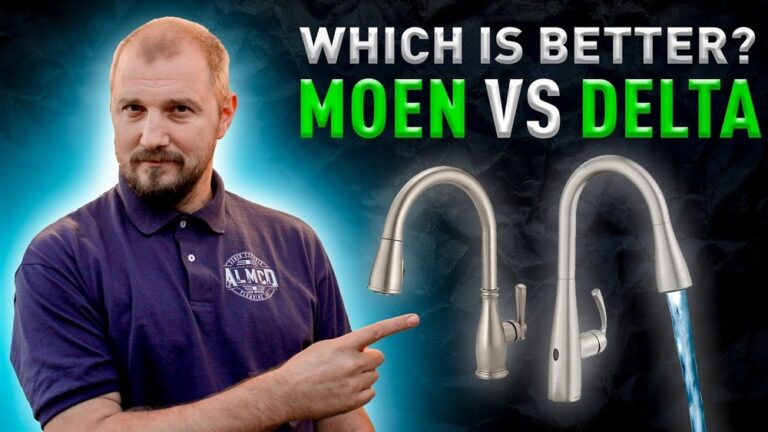
| Brand | Pull Out Models | Pull Down Models | Warranty |
|---|---|---|---|
| Moen | Yes | Yes | Limited Lifetime |
| Delta | Yes | Yes | Limited Lifetime |
| Kohler | Yes | Yes | Limited Lifetime |
| American Standard | Yes | Yes | Limited Lifetime |
Non-obvious insight: Some brands offer “quick connect” hoses for easy DIY installation. This feature can save hours and reduce the risk of leaks.
Final Thoughts: Making Your Choice
Both pull out and pull down kitchen faucets offer reliable performance and modern style. The right choice depends on your kitchen layout, daily habits, and personal taste. Pull out faucets are best for small spaces, flexible cleaning, and ergonomic comfort. Pull down faucets are perfect for deep sinks, tall cookware, and a modern, dramatic look.
Don’t rush your decision. Take time to measure your space, test spray heads in-store if possible, and read reviews. A good faucet can make kitchen chores faster and more enjoyable for years.
For more detailed kitchen faucet advice, check resources like Consumer Reports.

Credit: www.lowes.com
Frequently Asked Questions
What Is The Main Difference Between Pull Out And Pull Down Kitchen Faucets?
The biggest difference is the direction of movement. Pull out faucets have a spray head that pulls out horizontally, giving you more reach outside the sink. Pull down faucets pull the spray head straight down into the sink, which works best with deep sinks and tall pots.
Which Faucet Type Is Better For A Small Kitchen?
A pull out faucet is usually better for small kitchens. Its compact shape fits well under cabinets and the long hose is perfect for cleaning or filling containers beside the sink.
Do Pull Down Faucets Splash More Water?
Yes, sometimes. The tall spout of pull down faucets can cause more splashing, especially in shallow sinks. You can reduce splashing by adjusting water pressure and choosing a faucet with multiple spray modes.
How Long Do Pull Out And Pull Down Faucets Last?
With good care, both types last 10–15 years or more. Lifespan depends on build quality and materials—choose models with solid brass or stainless steel components for best durability.
Are Pull Out Or Pull Down Faucets Harder To Install?
Both are designed for easy installation. Pull out faucets may need extra space under the sink for the hose, while pull down faucets require more height above the sink. Always check your space and read the instructions before starting.
Making the right choice between a pull out and pull down kitchen faucet is all about matching your needs to the features of each type. With the information above, you can buy with confidence and enjoy a kitchen that works for you every day.