Male Vs Female Faucet Thread
When you need to connect something to a faucet—like a hose, filter, or aerator—you might run into a confusing detail: faucet threads. If you’ve ever tried to twist a connector onto a faucet and found it just wouldn’t fit, you’ve probably met the difference between male and female faucet threads. Understanding this small detail can make a big difference in plumbing projects, and it can save you time, money, and a lot of frustration.
This article will guide you through everything you need to know about male vs female faucet thread—including what they are, why they matter, how to identify them, common standards, and real-life examples. Whether you’re a DIY enthusiast, a new homeowner, or just want to fix a leaky tap, you’ll leave with full confidence in handling faucet connections.
What Are Faucet Threads?
Before diving into male and female types, it helps to understand what faucet threads are. Faucet threads are the spiraled grooves on the end of a faucet or connector that allow two parts to be screwed together. These threads make a tight, leak-proof connection for water to flow through.
You’ll find faucet threads in two main places:
- On the spout (where water comes out)
- On connectors or attachments (like a hose or aerator)
These threads come in different sizes and types, which can affect compatibility.
Male Faucet Thread Explained
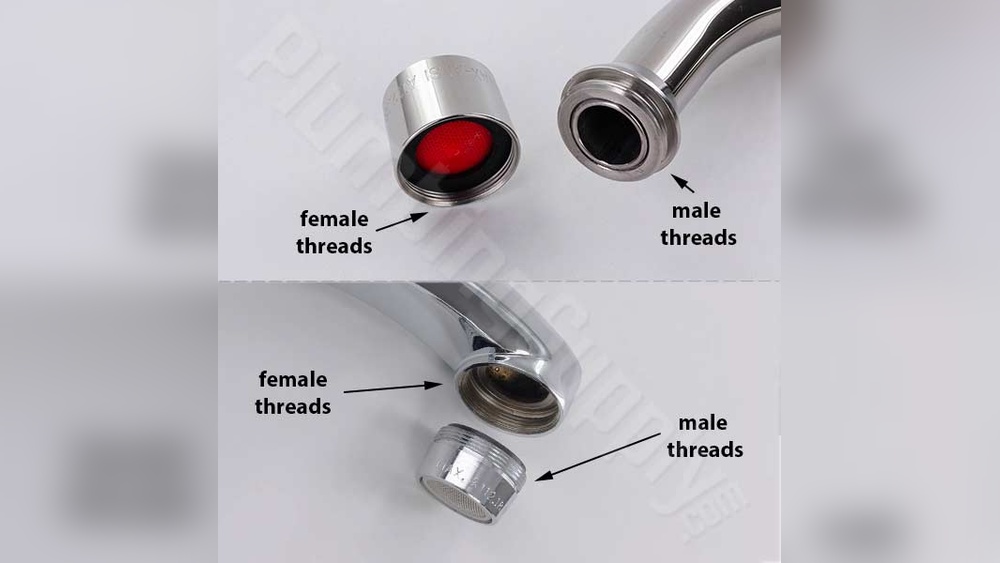
A male faucet thread refers to threads that are on the outside of a pipe or fitting. When you look at a male-threaded faucet, you see the ridges sticking out. The male threads are designed to go inside a female-threaded fitting.
Key Features Of Male Faucet Threads
- External threads: The spiral grooves are on the outside.
- Connects by inserting: The male threaded part screws into the female part.
- Common on outdoor faucets: Most garden spigots have male threads.
- Found on some indoor faucets: Some bathroom or kitchen spouts have male threads for aerators or filters.
Real-world Example
If you attach a garden hose directly to an outdoor tap, you’re usually connecting the hose’s female end to the male threads on the faucet.

Credit: onlinewaterfilters.com.au
Female Faucet Thread Explained
A female faucet thread is the opposite. The threads are inside the fitting, like a nut. When you look at a female-threaded faucet, you see a smooth outside and spiral grooves inside. The female thread is designed to accept a male-threaded fitting.
Key Features Of Female Faucet Threads
- Internal threads: The grooves are inside the opening.
- Connects by receiving: The male part screws into the female fitting.
- Common in indoor faucets: Many bathroom and kitchen faucets have female threads at the spout tip.
- Aerators and adapters: Often, you’ll need to screw an aerator or adapter into a female-threaded faucet.
Real-world Example
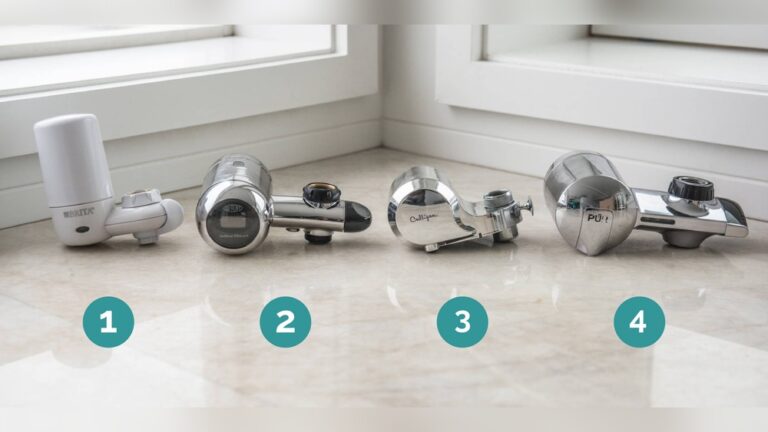
When you buy a faucet-mounted water filter, you often screw its male-threaded adapter into the female threads at the tip of your kitchen faucet.
Why Faucet Thread Type Matters
Choosing the wrong thread type is a common mistake, and it leads to leaks, wasted money, and broken parts. Here’s why it’s important:
- Compatibility: Male and female threads are not interchangeable. A male thread won’t fit another male thread, and the same for female.
- Leak Prevention: A proper fit ensures no gaps where water can escape.
- Safety: For filters and drinking water systems, a tight connection is important for health.
- Saving Time and Money: The right part the first time means fewer trips to the hardware store.

Credit: www.amazon.com
How To Identify Male Vs Female Faucet Threads
Many people get confused when looking at their faucet for the first time. Here’s how to quickly tell the difference:
Steps To Identify Thread Type
- Look at the Faucet Spout
- Male: Ridges or threads are on the outside of the spout.
- Female: The outside is smooth, and threads are inside the opening.
- Check the Connector
- Male: The connector’s threads are on the outside.
- Female: The connector’s threads are on the inside.
- Try Fitting
- Gently try to twist a male connector onto the faucet. If it fits outside, your faucet has male threads. If it fits inside, your faucet has female threads.
Non-obvious Insight
Many kitchen faucets in the U.S. have female threads, while most garden hoses have female connectors. This often requires an adapter if you want to connect a garden hose to your kitchen faucet.
Common Standards For Faucet Threads
Faucet threads are not the same everywhere. There are global standards, and knowing them helps you buy the right parts.
Main Thread Standards
- American National Pipe Thread (NPT)
- Used in the U.S. and Canada
- Common for plumbing and gas
- Tapered threads for a tight seal
- Garden Hose Thread (GHT)
- Used for outdoor faucets and hoses
- Not compatible with NPT or BSP
- British Standard Pipe (BSP)
- Used in the U.K., Europe, Australia, Asia
- Parallel or tapered threads
- Metric Thread
- Found in some European and Asian faucets
- Uses millimeter measurements
Quick Comparison
Here’s a simple comparison between NPT and GHT threads:
| Thread Type | Common Use | Size Example | Region |
|---|---|---|---|
| NPT (Male/Female) | Indoor faucets, plumbing | 1/2″ NPT | USA, Canada |
| GHT (Male/Female) | Garden hoses, outdoor spigots | 3/4″ GHT | USA, Canada |
| BSP (Male/Female) | Plumbing, general use | 1/2″ BSP | UK, Europe, Asia |
Non-obvious Insight
Some adapters are sold as “universal,” but they only fit the most common thread standard in your country. Always check the packaging for NPT, GHT, or BSP to avoid frustration.
Where You’ll Find Male And Female Threads
Outdoor Faucets
Almost all outdoor faucets (spigots) in North America have male threads. This means you can screw a standard garden hose (female connector) directly onto them.
Indoor Faucets
Indoor faucets, especially in kitchens and bathrooms, usually have female threads at the spout. Aerators and water filters are designed with male threads to screw into these.
Shower Heads
Shower arms coming out of the wall typically have male threads. Shower heads have female threads to screw on.
Faucet Aerators
An aerator is the small screen at the tip of a faucet. It can have either male or female threads, depending on the faucet model. If your faucet has male threads, you’ll need a female-threaded aerator, and vice versa.
Adapters And Converters
Because there are many thread types and standards, you’ll often need an adapter. An adapter is a small part that changes the thread type or size so two parts can connect.
Types Of Faucet Thread Adapters
- Male-to-Female Adapter
- Changes a male-threaded faucet to female threads.
- Female-to-Male Adapter
- Changes a female-threaded faucet to male threads.
- Thread Standard Converter
- Converts from NPT to GHT, or from BSP to NPT, etc.
- Size Reducer/Expander
- Allows connections between different thread sizes (e.g., from 3/4″ to 1/2″).
Example Table: Common Adapter Uses
| Situation | Faucet Thread | Needed Adapter | Result |
|---|---|---|---|
| Connect garden hose to kitchen faucet | Female (kitchen spout) | Male-threaded adapter with GHT end | Hose attaches to faucet |
| Install water filter on outdoor spigot | Male (spigot) | Female adapter to accept filter | Filter attaches securely |
| Connect UK hose to US faucet | NPT (male or female) | NPT to BSP converter | UK hose fits US faucet |
Practical Tip
When buying an adapter, always bring the old part or take a photo. Match the thread size and type—guessing leads to mistakes.
Thread Sizes: What Do The Numbers Mean?
Thread sizes are shown in inches or millimeters, but they don’t always match the faucet’s actual diameter. For example, a “1/2 inch” thread does not measure exactly 1/2 inch across.
Common Faucet Thread Sizes
- 1/2″ NPT: Common for indoor plumbing.
- 3/4″ GHT: Most garden hoses.
- 15/16″-27: Common for kitchen faucet aerators (male).
- 55/64″-27: Common for kitchen faucet aerators (female).
- M22x1: Metric kitchen faucets in Europe.
Table: Typical Faucet Thread Sizes
| Thread Size | Where Found | Male or Female |
|---|---|---|
| 15/16″-27 | Kitchen/bath aerators (male) | Male |
| 55/64″-27 | Kitchen/bath aerators (female) | Female |
| 3/4″ GHT | Garden hoses, spigots | Male (spigot), Female (hose) |
Pro Tip
If you’re unsure of the size, use a thread gauge or bring the old part to the hardware store. Staff can help you match the threads exactly.
How To Measure Faucet Threads
Measuring faucet threads can be tricky. Here’s a simple way:
- Measure the outside diameter for male threads, and the inside diameter for female threads.
- Count the threads per inch (TPI) or look for the thread pitch (distance between threads).
- Compare with a chart to find the standard size.
You can buy a thread gauge or use a ruler for a rough measurement. For more accuracy, many hardware stores have sizing boards to check your part.
Example
If you measure about 0.92 inches outside diameter and count 27 threads per inch, you likely have a 15/16″-27 male aerator.

Credit: us.amazon.com
Common Problems With Faucet Threads
Even experienced DIYers run into trouble with faucet threads. Here are the most common issues and how to avoid them:
Cross-threading
If you force two parts together when the threads don’t match, you can cross-thread them. This damages both parts and causes leaks.
Tip: Always start threading by hand, and never use force. If it doesn’t twist easily, it’s probably the wrong type.
Leaks At The Connection
Leaks usually mean the threads don’t fit well, or the washer is missing or damaged.
Tip: Check for rubber washers or O-rings. For metal-to-metal connections (like NPT), use thread seal tape (Teflon tape).
Wrong Adapter
With so many thread types, it’s easy to buy the wrong adapter.
Tip: Double-check the thread standard (NPT, BSP, GHT) and size before buying.
Mixing Standards
Trying to connect a BSP fitting to an NPT faucet usually results in a poor fit and leaks.
Tip: Use a proper converter, not just force.
Male Vs Female: Which Is Better For Your Project?
There’s no “better” type—just the right one for your situation. Here’s how to choose:
When To Use Male Threads
- When connecting to a female-threaded faucet.
- When you want to add an aerator or filter designed for female threads.
When To Use Female Threads
- When connecting to a male-threaded faucet or spigot.
- When your accessory (like a hose) has male threads.
Adaptability
Some faucets come with both male and female threads (aerators with dual threads). These are more adaptable for different accessories.
Real-world Scenario
If you want to add a water filter to your kitchen faucet and the filter only fits male threads, but your faucet has female threads, you’ll need a male-threaded adapter.
Regional Differences In Faucet Threads
Faucet threads are not universal. Here’s what you should know based on where you live or if you’re buying online:
- United States/Canada: Most indoor faucet spouts use female threads (15/16″-27 or 55/64″-27), outdoor spigots are male (3/4″ GHT).
- UK/Europe/Australia: BSP threads are standard, sizes may differ, and adapters are usually needed for U.S. parts.
- Asia: Mix of metric and BSP threads.
If you move or buy parts from another country, always check the standard.
Non-obvious Insight
Online retailers may list faucet accessories as “fits most faucets,” but this often means “fits most U. S. faucets. ” Always check the thread size and type in the product details.
Environmental And Safety Considerations
Plumbing connections are not just about convenience—they impact water safety and environmental protection.
Lead-free Connections
If you’re adding a filter, check that all adapters and connectors are lead-free. This is especially important for drinking water.
Water Conservation
A good fit prevents leaks, which saves water. When adding accessories like aerators, choose those with flow restrictors to reduce waste.
Health
Leaky or mismatched threads can lead to mold, water damage, or contamination. Always use the correct parts, and check for leaks after installation.
Tips For A Hassle-free Installation
- Read the Packaging: Look for thread type, size, and compatible standards.
- Bring Samples: If possible, take the old part to the store.
- Use Plumber’s Tape: For metal threads (NPT), wrap Teflon tape clockwise to seal.
- Hand-Tighten First: Start by hand to avoid cross-threading.
- Don’t Overtighten: Tighten just enough for a seal, not more.
- Check for Leaks: Turn on the water and watch for drips.
- Ask for Help: If stuck, ask staff at the hardware store or check guides from reliable sources like Family Handyman.
Frequently Asked Questions
What Is The Difference Between Male And Female Faucet Threads?
Male faucet threads are on the outside of the pipe or fitting, while female faucet threads are on the inside. Male threads screw into female threads, making a tight, leak-proof connection.
How Do I Know What Type Of Thread My Faucet Has?
Look at the faucet spout. If you see threads on the outside, it’s male. If the threads are inside, it’s female. You can also check the product manual or measure the threads.
Can I Use A Male-threaded Connector With A Female-threaded Faucet?
Yes, that’s exactly how connections are designed. Male threads fit into female threads. If the types don’t match, you’ll need an adapter.
What Is The Most Common Faucet Thread Size?
For kitchen and bathroom faucets in the U.S., the most common sizes are 15/16″-27 male and 55/64″-27 female. For outdoor spigots, it’s usually 3/4″ GHT (male).
What Should I Do If My Connector Doesn’t Fit My Faucet?
First, check the thread type and size. You may need an adapter or converter. Bring your old part to the hardware store, or ask for help to match the correct threads.
Connecting faucets and accessories doesn’t have to be confusing. Once you understand the basics of male vs female faucet thread, you’ll make better choices, avoid common mistakes, and enjoy leak-free plumbing for years. Always check the thread type, use adapters when needed, and don’t be afraid to ask for expert advice. Proper connections save water, protect your home, and keep your projects stress-free.