What is a Frost Free Faucet? Everything You Need to Know
A dripping faucet in the middle of winter can mean more than just wasted water. In cold climates, an ordinary outdoor faucet can freeze, burst, and flood your home’s foundation or basement. This is why many homeowners and plumbers recommend installing a frost free faucet. But what is it, how does it work, and is it truly worth the upgrade? If you’re looking for clear answers without plumbing jargon, you’re in the right place.
This article will break down everything you need to know about frost free faucets. You’ll learn how they prevent freezing, what makes them different from standard outdoor faucets, key features to look for, installation tips, and common mistakes to avoid.
By the end, you’ll understand not just what a frost free faucet is, but also why it can save you money, headaches, and repairs in the long run.
What Is A Frost Free Faucet?
A frost free faucet (also called a frost free sillcock or hose bibb) is a type of outdoor faucet designed to prevent water from freezing in the pipe during cold weather. Unlike standard outdoor faucets, which have the shut-off valve right behind the handle, a frost free faucet’s valve is located much deeper inside the house, past the point where temperatures drop below freezing.
When you turn off a frost free faucet, the water drains out of the exposed part of the pipe, leaving no water to freeze, expand, and cause damage. This simple design change solves a big problem for homes in areas with cold winters.
Why Freezing Pipes Are A Big Problem
When water freezes, it expands by nearly 9%. If water is trapped inside a metal pipe, this expansion puts enormous pressure on the pipe walls. The result is often a cracked pipe or a burst connection, leading to flooding once the ice melts.
According to the Insurance Institute for Business & Home Safety, a burst pipe can cost homeowners over $5,000 in repairs, on average.
Standard outdoor faucets are especially vulnerable because they stick out from the house and are exposed to freezing air. If you forget to shut off and drain them before winter, you’re at risk for leaks and water damage.
The Frost Free Solution
A frost free faucet moves the shut-off valve several inches (often 8–24 inches) inside the house, where it’s warmer. The pipe is sloped slightly downward toward the spout. When you turn the handle off, water drains out of the exposed part, so even on the coldest nights, there’s nothing left to freeze.
This difference in design is invisible from the outside—frost free faucets look almost the same as regular ones. But inside the wall, the protection is built in.
How Does A Frost Free Faucet Work?
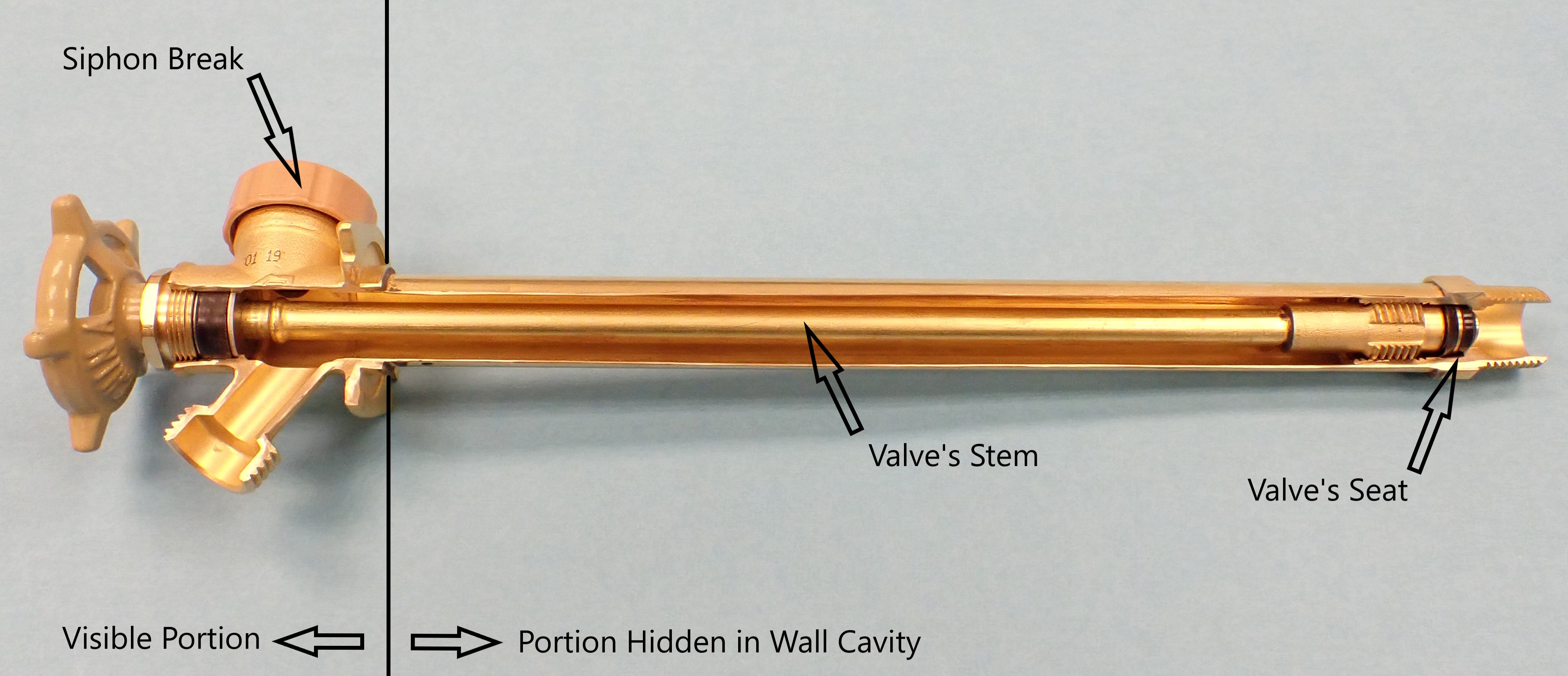
The key to a frost free faucet’s effectiveness is its long stem and smart valve placement. Here’s how it works, step by step:
- Long Stem Tube: The faucet handle is connected to a long metal tube (the stem) that reaches back inside your house, past the point where freezing temperatures can reach.
- Valve Placement: The actual valve that stops the flow of water is located at the warm end of this tube, not outside.
- Self-Draining: When you turn off the faucet, any remaining water in the exposed part drains out through a small hole, leaving the stem empty.
- No Water to Freeze: Because there’s no water trapped near the outside wall, there’s nothing to freeze, even if the temperature drops below zero.
Here’s a simplified diagram to help you visualize the difference:
| Feature | Standard Outdoor Faucet | Frost Free Faucet |
|---|---|---|
| Valve Location | Right behind the handle (outside wall) | Deep inside the house (warm side) |
| Drainage | Stays full of water | Drains after use |
| Freeze Protection | None | Built-in |
Key Components
- Handle: Turns the water on and off.
- Stem: Long metal tube, up to two feet long.
- Valve Assembly: Located inside the house.
- Vacuum Breaker (optional): Prevents contaminated water from flowing backward into your drinking water.
- Drain Hole: Lets water escape when the faucet is turned off.
Frost Free Faucet Vs Standard Faucet
Many homeowners ask, “Do I really need a frost free faucet, or can I just use the old kind? ” Understanding the differences helps you make the right choice.
Main Differences
| Feature | Standard Faucet | Frost Free Faucet |
|---|---|---|
| Installation Cost | Lower | Higher (but saves on repairs) |
| Freeze Protection | None | Yes |
| Maintenance | Must be drained manually | Self-draining |
| Lifespan | Shorter (if exposed to freezing) | Longer (less damage risk) |
| Best For | Warm climates | Cold climates |
Example
If you live in Florida, a standard faucet is usually fine. But in Minnesota, a frost free faucet is almost essential. In fact, many building codes in cold states require them for all new homes.
Common Mistakes
Many beginners think wrapping a faucet with insulation or foam is enough. In reality, insulation slows heat loss but does not stop water from freezing if left inside a pipe. A frost free faucet is a much more reliable solution.
Types Of Frost Free Faucets
Not all frost free faucets are the same. Here are the main types you’ll find:
1. Standard Frost Free Sillcock
This is the most common type, with a long stem and manual handle. It replaces a standard outdoor faucet and fits in the same space.
2. Frost Free Sillcock With Vacuum Breaker
Includes a built-in device to stop dirty water from being sucked backward into your home’s water supply. Many codes now require this feature for safety.
3. Anti-siphon Frost Free Faucet
Designed to prevent water from being siphoned back into the main water line. Useful if you ever connect a hose to chemicals or fertilizer.
4. Quarter-turn Frost Free Faucet
Uses a ball valve that turns 90 degrees (a quarter turn) instead of a threaded stem. These are easier to operate, especially for those with limited hand strength.
5. Commercial Frost Free Faucets
Heavier-duty versions for schools, apartments, or businesses. Often built for more use and higher water pressure.
Length Options
Frost free faucets come in different lengths—typically 4, 8, 12, 16, or 24 inches. The right length depends on your wall thickness. The valve must be installed past the cold “danger zone,” so measure carefully.
Credit: www.homedepot.com
Key Features To Look For
If you’re buying a frost free faucet, pay attention to these features:
- Proper Length: Too short, and it won’t be frost free. Too long, and it’s hard to install. Measure your wall and choose the right size.
- Vacuum Breaker: Adds safety and is often required by code.
- Durable Materials: Brass or stainless steel last longer than cheaper metals.
- Easy Repair: Some models let you replace washers or stems without removing the whole faucet.
- Quarter-Turn Operation: More user-friendly, especially for children or older adults.
- Brand Reputation: Look for trusted brands with good reviews and warranties.
Real-world Example
Suppose your home has 12-inch thick brick walls. You need a frost free faucet with at least a 14-inch stem to reach past the insulation and stay warm. If you pick an 8-inch model, the valve will still be in the cold zone—and freezing can still occur.
How To Install A Frost Free Faucet
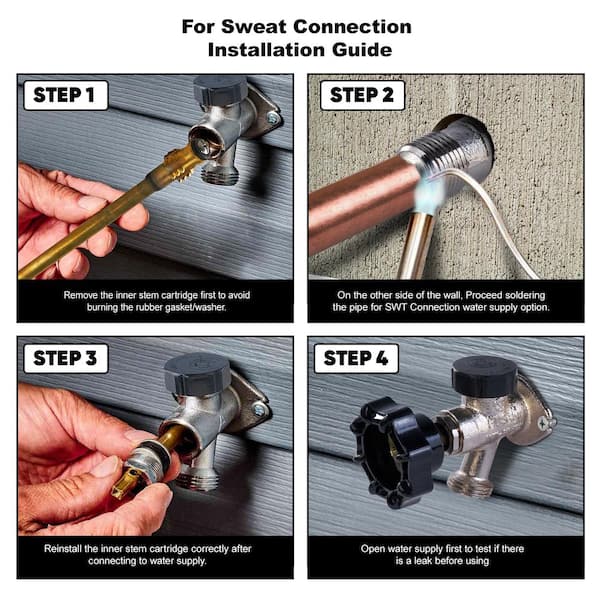
Installing a frost free faucet is a practical home upgrade, but it does require some plumbing skills. Here’s a simplified step-by-step guide:
Tools & Materials
- Frost free faucet (proper length)
- Pipe cutter or hacksaw
- Pipe wrench
- Soldering kit (for copper pipes) or push-fit connectors (for PEX)
- Pipe insulation
- Drill (if new hole needed)
- Caulking gun
Steps
- Turn Off Water Supply: Always shut off the main water before starting.
- Remove Old Faucet: Unscrew and pull out the old faucet.
- Measure Wall Thickness: From the outside wall to where the water line is, so your new faucet fits correctly.
- Prepare the Pipe: Cut the supply pipe as needed. Clean and dry the area.
- Connect the Faucet: Solder or use a push-fit connector to attach the new faucet to your water line.
- Mount the Faucet: Slide the stem through the wall and screw the flange to the outside wall.
- Seal the Edges: Use caulk around the outside to stop water and air leaks.
- Test for Leaks: Turn the water back on and check for leaks inside and outside.
Installation Table: Common Wall Types & Faucet Lengths
| Wall Type | Typical Thickness | Recommended Faucet Length |
|---|---|---|
| Wood Framed Wall | 4–6 inches | 8 inches |
| Brick Wall | 8–12 inches | 12–14 inches |
| Stone Wall | 12–18 inches | 16–20 inches |
Pro Tips
- Slope the faucet slightly downward toward the outside to help it drain.
- Insulate any exposed pipe inside the house for extra protection.
- Don’t overtighten connections—this can crack the pipe or faucet.
Common Mistakes
One common mistake is using a faucet that’s too short. If the shut-off valve stays in the cold part of the wall, the faucet can still freeze and burst. Another mistake is failing to seal the gap around the faucet, which lets cold air into your house.
Maintenance And Care
Frost free faucets need much less maintenance than standard outdoor faucets, but a few simple steps keep them working smoothly.
Regular Checks
- Inspect Annually: Each fall, check for leaks, cracks, or drips.
- Remove Hoses Before Winter: Leaving a hose attached traps water in the faucet, defeating the frost free design.
- Test for Proper Drainage: After turning off the faucet, see if water drains out. If not, the drain hole may be blocked.
Cleaning
If your faucet isn’t draining, clean the drain hole with a small wire. Debris or mineral buildup can clog it.
Replacing Parts
Most frost free faucets have replaceable washers or stems. If the faucet drips even when off, replacing these parts usually solves the problem. Turn off the water before making repairs.
Winter Precautions
Even with a frost free faucet, always remove hoses and splitters before freezing weather. Hoses trap water inside, which can freeze and damage the faucet.
Advantages Of Frost Free Faucets
Switching to a frost free faucet has many benefits, especially if you live in a place with cold winters.
- Prevents Burst Pipes: The main reason to install one. Avoids costly leaks and repairs.
- Low Maintenance: No need to drain pipes each year.
- Peace of Mind: You don’t have to worry about sudden freezes.
- Longer Lifespan: Less risk of freeze damage means your plumbing lasts longer.
- Safer for Water Quality: Models with vacuum breakers protect against contamination.
Data: Cost Savings
According to the Insurance Information Institute, the average water damage claim from a burst pipe is over $10,000. The cost to install a frost free faucet is typically $70–$150 in parts, plus labor. One small upgrade can save thousands.
Not-so-obvious Insights
- Even “Frost Free” Isn’t Foolproof: If a hose is left connected, water can be trapped and freeze. Many burst faucets are caused by this mistake, not the faucet design itself.
- Wall Insulation Matters: If the pipe is installed in a poorly insulated wall, even a frost free faucet can fail in extreme cold. Always check that the valve is past the cold zone.
When Should You Replace Your Outdoor Faucet?
Many old homes still have standard outdoor faucets. Here are signs you should consider upgrading to a frost free model:
- You Live in a Cold Climate: If temperatures drop below freezing, a frost free faucet is a smart investment.
- Cracked or Leaking Faucet: If your current faucet leaks or is hard to turn, replacement makes sense.
- Previous Pipe Burst: If you’ve had a burst pipe before, upgrading prevents future problems.
- Remodeling or New Siding: If you’re already opening up the wall, it’s the perfect time to upgrade.
Real-life Example
After a cold snap in Texas in 2021, thousands of homeowners experienced burst pipes because their outdoor faucets froze. Upgrading to frost free models became a top priority in repairs and new builds.
Common Myths And Misunderstandings
Even experienced homeowners and handymen sometimes misunderstand frost free faucets. Here are the most common myths:
Myth 1: “frost Free Faucets Never Freeze”
Truth: They can still freeze if installed incorrectly, or if a hose is left attached in winter. Proper installation and use are essential.
Myth 2: “insulation Alone Is Enough”
Truth: Insulation helps, but it does not drain water from the exposed pipe. Frost free faucets actually remove water, making them much safer.
Myth 3: “all Outdoor Faucets Are Frost Free Now”
Truth: Many cheap or older models are still standard faucets. Always check before buying or replacing.
Myth 4: “they’re Hard To Install”
Truth: For most homes, installing a frost free faucet is a straightforward job for a plumber, or a confident DIYer with basic skills.
Myth 5: “they’re Expensive”
Truth: The cost difference is small compared to the potential damage from a burst pipe. They pay for themselves in peace of mind and avoided repairs.

Credit: southendplumbingllc.com
Choosing The Right Frost Free Faucet
With many brands and types on the market, choosing the right frost free faucet can be confusing. Here’s how to decide:
Key Factors
- Climate: Colder areas may need longer stems.
- Wall Thickness: Measure carefully; too short won’t protect you.
- Building Codes: Some areas require vacuum breakers or anti-siphon features.
- Material Quality: Brass is the gold standard for durability.
- Ease of Use: Quarter-turn handles are easier for some users.
Brand Examples
Top brands include Woodford, Mueller, and Prier. These are known for quality, easy-to-find replacement parts, and good warranties.
Where To Buy
Home improvement stores like Home Depot, Lowe’s, or plumbing supply shops stock frost free faucets. You can also buy from reputable online retailers.
Not-so-obvious Insight
Before buying, check your local building codes. Some cities require anti-siphon or vacuum breaker models, and inspectors can make you replace non-compliant faucets during a home sale.
Environmental Benefits
A frost free faucet can also be a green choice. By preventing leaks and burst pipes, you avoid wasting thousands of gallons of water. A single burst pipe can lose over 250 gallons per day. That’s enough to fill several bathtubs.
Repairing water damage also uses resources and energy. Preventing problems in the first place is better for your wallet and the planet.
For more on water conservation and plumbing safety, visit the Wikipedia page on frost free faucets.
Credit: www.edtengineers.com
Frequently Asked Questions
What Is The Main Difference Between A Frost Free Faucet And A Regular Outdoor Faucet?
A frost free faucet has its shut-off valve located deep inside your house, where it’s warm, and drains water from the exposed pipe after each use. A regular outdoor faucet has the valve right behind the handle, outside the house, which leaves water in the pipe and can freeze in cold weather.
Do I Need To Do Anything Special With A Frost Free Faucet Before Winter?
Yes. Always remove garden hoses and any attachments before freezing weather. Leaving a hose connected can trap water in the faucet, which can freeze and damage even a frost free model.
Can I Install A Frost Free Faucet Myself, Or Do I Need A Plumber?
If you have basic plumbing skills and tools, you can install a frost free faucet yourself. However, if you’re unsure about cutting pipes, soldering, or working inside walls, it’s best to hire a professional plumber to ensure it’s done right.
How Do I Know What Length Frost Free Faucet I Need?
Measure from the outside wall to the nearest heated area inside your home (usually where the water pipe comes from). Choose a faucet with a stem at least as long as this distance, so the shut-off valve is always on the warm side.
Are Frost Free Faucets Worth The Extra Cost?
Absolutely. The small extra cost of a frost free faucet is tiny compared to the cost of repairing water damage from a burst pipe. They also save you time and worry every winter.
A frost free faucet isn’t just another plumbing upgrade—it’s a smart, affordable way to protect your home from cold-weather disasters. With the right installation and a little care, you’ll enjoy worry-free winters for years to come.