Which Side is Hot and Cold Faucet? Your Quick Guide
Many people have turned on a faucet, expecting warm water, only to get a cold shock. Others find themselves in new places, unsure which handle controls hot and which cold. This confusion may seem minor, but it matters for comfort, safety, and sometimes even health. The placement of hot and cold faucet controls isn’t random. It’s rooted in long-standing traditions, building codes, and practical needs. Yet, not every faucet follows the same rule, and mistakes are surprisingly common.
If you’ve ever wondered which side is hot and which is cold—or why the arrangement matters—you’re not alone. This guide will clear up the confusion, exploring the history, standards, exceptions, and best practices for faucet installation around the world. You’ll also discover why getting it right can prevent accidents and make your daily routine easier.
By the end, you’ll know exactly what to expect when you reach for any faucet, whether you’re at home, in a hotel, or abroad.
The Standard Arrangement: Hot On The Left, Cold On The Right
For most people, the answer is simple: hot is on the left, cold is on the right. This arrangement is the standard in many countries, including the United States, the United Kingdom, Canada, Australia, and much of Europe. It applies to sinks, bathtubs, showers, and even outdoor taps in some cases.
The reason behind this standard goes back more than a century. When indoor plumbing became common, hot water was a luxury. Most homes had only cold water supplied from the main line, so the first hot water pipes were added later, often placed to the left of existing cold pipes for convenience.
Over time, plumbing codes began to require this arrangement for consistency and safety.
Why Is This Arrangement Important?
- Safety: If people expect hot on the left, mixing it up can lead to burns, especially for children or the elderly.
- Accessibility: People with visual impairments or limited mobility rely on consistent faucet arrangements.
- Building Codes: Many countries require this layout by law, so plumbers and inspectors check for it.
Is The Standard Universal?
While this rule covers most modern homes and public buildings, not every country or situation follows it. Some older buildings, DIY repairs, or imported fixtures may reverse the arrangement or use different types of controls. That’s why it’s wise to test the water temperature before use, especially in unfamiliar places.
History Behind Faucet Arrangement
Understanding why the hot is left, cold is right standard exists requires looking at plumbing history. Indoor plumbing became widespread in the 19th and early 20th centuries. At that time, cold water was the default, and hot water was often added later as technology improved.
In many places, hot water tanks were installed in basements or utility rooms, with pipes running along the left side of walls due to how homes were constructed. Plumbers found it easier to position the hot tap on the left and the cold on the right, especially when facing the sink or tub.
By the early 1900s, this arrangement was so common that it became part of official plumbing codes. For example, the Uniform Plumbing Code in the United States and similar standards in the UK began specifying this layout to prevent confusion and accidents.
International Variations
Not every country follows the same faucet arrangement, and you may notice differences when traveling or living abroad. Here’s how some regions handle faucet controls:
| Country/Region | Hot Side | Cold Side | Notes |
|---|---|---|---|
| United States | Left | Right | Standard in most homes and buildings |
| United Kingdom | Left | Right | Traditional, but some older homes may differ |
| Australia | Left | Right | Follows UK standards |
| Japan | Left | Right | Mostly follows international standard |
| Russia | Left | Right | Standard, but some Soviet-era buildings may vary |
| Italy | Left | Right | Common in modern installations |
| China | Left | Right | Newer plumbing follows Western standards, but older setups may differ |
Exceptions And Special Cases
Some countries or regions use different arrangements. For example, in some parts of South America or Africa, older buildings may have only cold water taps. In rare cases, taps are reversed due to local custom or installation error. Also, some European countries use symbols (a red dot for hot, a blue dot for cold) rather than relying only on position.
Faucet Types And Control Designs
Faucets come in many shapes and mechanisms. The arrangement of hot and cold can look different depending on the style:
Separate Handles (two-tap)
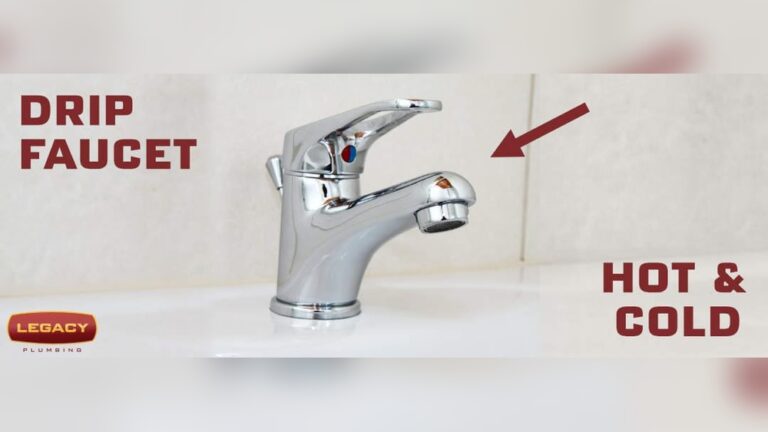
Traditional sinks often have two handles or taps: one for hot, one for cold. The left handle controls hot water, the right controls cold. This is the clearest layout and is easy to check visually.
Single-handle Faucets
Modern sinks often use a single-lever faucet. Pushing the lever to the left increases the hot water flow; pushing right increases cold. The center position usually delivers mixed or warm water. The same left-hot, right-cold logic applies.
Wall-mounted Faucets
Wall-mounted faucets, common in commercial kitchens or some European bathrooms, still follow the left-hot, right-cold standard, but the pipes may be hidden inside the wall.
Mixer Taps
A mixer tap combines hot and cold in one spout but allows you to adjust the temperature using two handles or a single lever. The underlying plumbing still follows the left-right rule, even if the control is more complex.
Thermostatic Controls
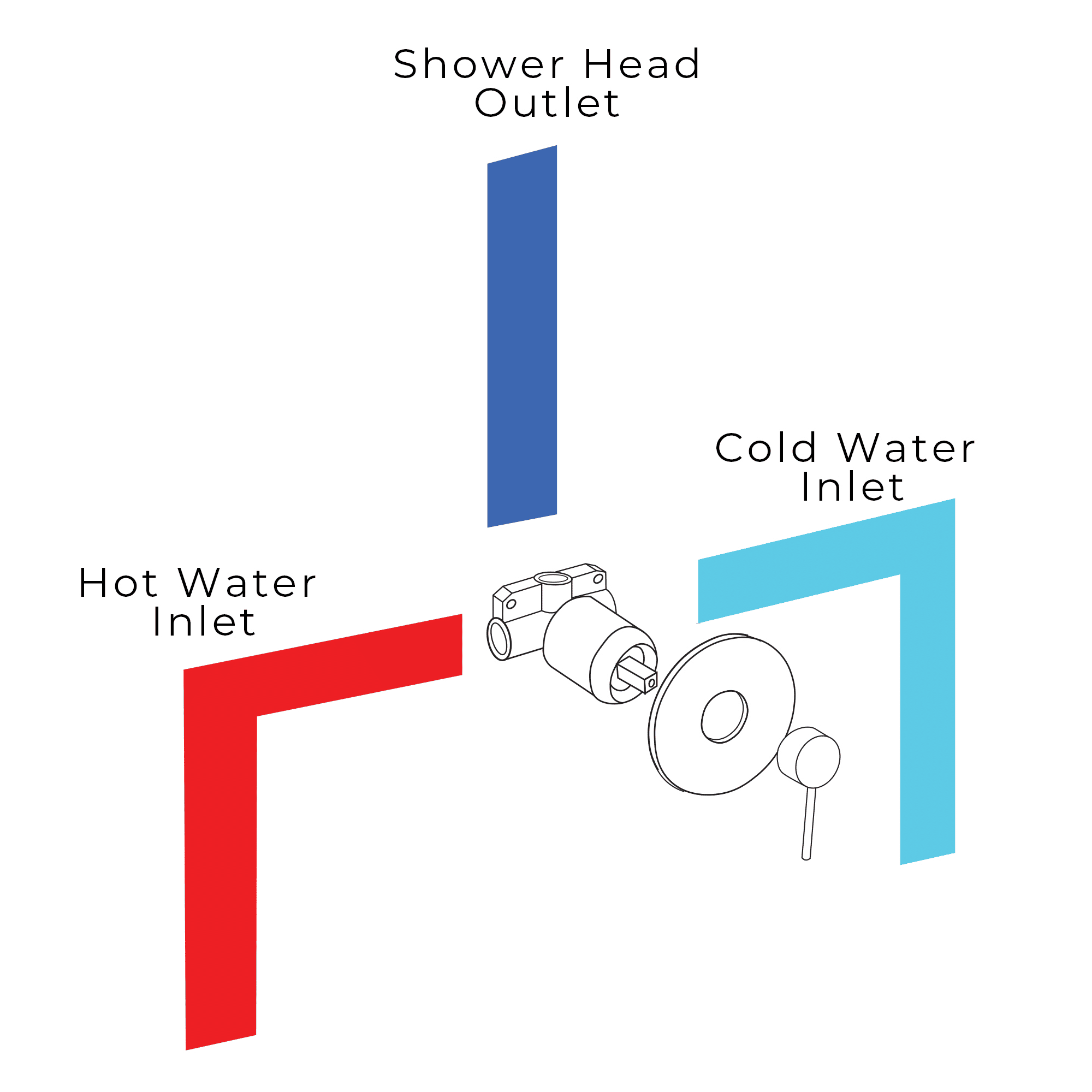
Some showers and modern bath taps use thermostatic controls that let you set a precise temperature. These often have clear markings but may not rely on left-right logic. Always check the labels or instructions for these systems.

Credit: oltsw.com
Common Symbols And Markings
Faucet manufacturers use simple symbols to help users identify hot and cold controls:
- Red or H: Hot water
- Blue or C: Cold water
- Red dot/blue dot: Color-coded indicators
- “W” or “C”: Some countries use local language initials (e.g., “F” for “frío” in Spanish)
If you’re unsure, check for these symbols on the faucet handles or levers.
How To Identify Hot And Cold Sides
Even with standards, mistakes happen. Here are practical ways to check which side is hot and which is cold:
- Turn on one side and wait: If the water gets warmer after a few seconds, you’ve found the hot side.
- Look for color markings: Red (or a sun symbol) means hot; blue (or a snowflake) means cold.
- Check the installation manual: If you installed the faucet yourself, the manual will confirm the correct arrangement.
- Ask the plumber or landlord: If you’re renting or in a hotel, it’s fine to ask.
- Feel the pipes: Hot water pipes are usually warmer to the touch, but this only works if the pipes are accessible and safe to touch.
Credit: oltsw.com
Why Faucet Arrangement Matters
Some people wonder if it really matters which side is hot or cold. The answer is yes, for several important reasons:
Safety Concerns
Incorrect faucet arrangement can lead to accidental burns or scalds. Children, seniors, and people with disabilities are especially at risk. If someone expects cold water but gets hot instead, serious injury can occur in seconds.
Legal Requirements
In many countries, building codes make the left-hot, right-cold rule a legal requirement. Inspectors check for this during construction or renovation. Non-compliance can lead to fines or forced changes.
Consistency And Usability
Standardization makes life easier. Travelers, hotel guests, and new homeowners all benefit from knowing what to expect. Imagine trying to brush your teeth in a new place, only to get boiling water from the wrong tap.
Plumbing System Efficiency
Proper arrangement helps plumbers and maintenance workers identify and fix issues quickly. It also ensures that hot water systems work as designed, reducing waste and saving energy.
What To Do If Your Faucet Is Reversed
If you discover your faucet is installed backward (hot on the right, cold on the left), you have a few options:
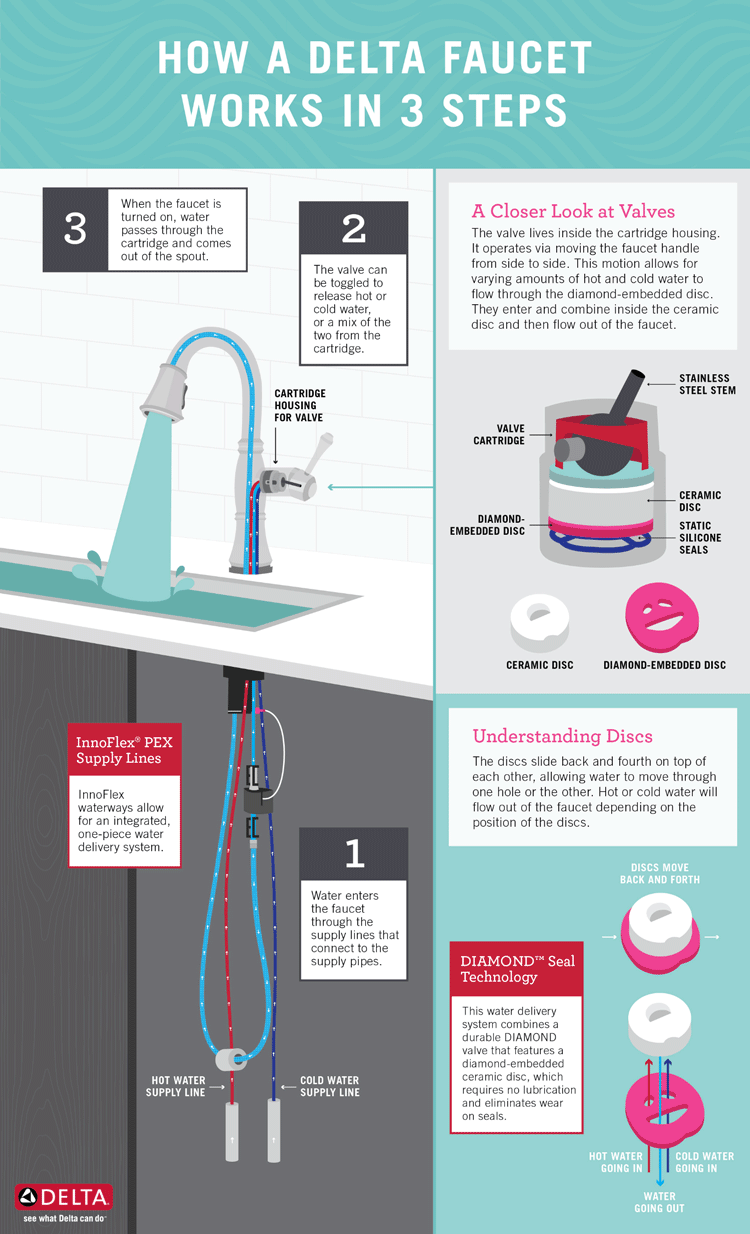
- Switch the supply lines: This is the simplest fix for many modern faucets. Turn off the water, swap the flexible hoses, and turn the water back on.
- Call a plumber: If the pipes are rigid or hidden, a professional may need to reroute them.
- Label the taps: If you can’t change the plumbing, use stickers or color markers to clearly indicate which side is which.
It’s best to fix the issue if possible, especially in homes with children or elderly residents. If you’re renting, inform the landlord, as building codes may require a correction.
Credit: www.deltafaucet.com
Hot And Cold Faucets In Public Places
Public restrooms, schools, hospitals, and hotels all follow the left-hot, right-cold rule for safety. However, some facilities use special fixtures:
- Sensor taps: These often provide only cold or lukewarm water for hygiene reasons.
- Push-button taps: Common in schools or stadiums, these may be preset to a safe temperature.
- Commercial kitchens: May have separate sinks for handwashing (with hot and cold) and dishwashing (often hot only).
Always test unfamiliar taps before use, and look for signs or markings indicating temperature.
Common Installation Mistakes
Even professional plumbers sometimes make mistakes. Here are some common problems with faucet installation:
- Reversed supply lines: The most frequent error, leading to hot water on the right.
- Missing color indicators: Some faucets lack markings, making it hard to identify sides.
- Improper mixer tap installation: Mixer taps can be connected incorrectly, so hot and cold controls are swapped.
- Old or DIY plumbing: In older homes or amateur repairs, standards may not be followed.
If you encounter these issues, consider hiring a professional to inspect and fix your plumbing.
Practical Tips For Homeowners
If you’re remodeling or installing a new faucet, follow these tips for a smooth and safe experience:
- Buy quality fixtures: Choose reputable brands that follow international standards.
- Check before installation: Confirm which side each supply line connects to.
- Use color-coded hoses: Some flexible hoses are marked red or blue for easy identification.
- Test before use: Always run water through the faucet after installation to confirm the arrangement.
- Read the manual: Even if you’re handy, the manufacturer’s instructions are important.
If you’re unsure about your skills, don’t hesitate to call a licensed plumber.
Special Considerations: Accessibility And Universal Design
For people with disabilities or limited mobility, faucet arrangement is even more critical. Universal design principles require that fixtures be predictable and easy to use. Many accessible faucets feature larger handles, lever controls, or touchless operation, but still follow the left-hot, right-cold rule.
In homes with children, consider installing anti-scald devices or thermostatic mixing valves. These prevent water from getting too hot, even if the hot tap is opened fully.
Hot And Cold Faucets In Different Fixtures
Not all plumbing fixtures use the same arrangement. Here’s a look at common household fixtures:
| Fixture | Standard Hot Side | Standard Cold Side | Notes |
|---|---|---|---|
| Bathroom Sink | Left | Right | Most common setup worldwide |
| Kitchen Sink | Left | Right | Same as bathroom sink |
| Bathtub/Shower | Left | Right | Often combined in a single control |
| Outdoor Faucet | Varies | Varies | Usually cold only, but left-right rule applies if both exist |
| Bidet | Left | Right | Follows sink standard |
Myths And Misconceptions
Many myths surround hot and cold faucet arrangements. Here are some common ones:
- “Hot and cold sides are random.” In almost all modern buildings, there’s a clear standard.
- “Single-handle faucets work differently.” They still follow the left-hot, right-cold rule; the lever direction just controls the mix.
- “All countries use the same layout.” Most do, but not all. Always check locally, especially in older or rural properties.
- “It doesn’t matter if the taps are swapped.” It does matter, especially for safety and compliance.
Non-obvious Insights For Beginners
- Plumbing Codes Matter: Many DIYers don’t realize local plumbing codes can require specific faucet arrangements. Ignoring this can cause problems when selling a home or passing inspections.
- Thermostatic Valves Add Safety: New faucets with built-in thermostatic mixing can protect against scalding, especially important for families with children or elderly.
- Universal Design Benefits Everyone: Predictable faucet arrangements help not just people with disabilities, but anyone unfamiliar with a home or building.
- Mixing Valves Can Be Hidden: In some modern systems, the mixing of hot and cold happens under the sink or behind the wall, so visible controls may not tell the whole story.
Statistics On Faucet Safety And Usage
- According to the U.S. Consumer Product Safety Commission, over 5,000 children are treated each year for tap water scald burns in the United States.
- A survey by the UK’s Chartered Institute of Plumbing and Heating Engineering found that over 80% of UK homes follow the left-hot, right-cold rule.
- In Australia, plumbing standards (AS/NZS 3500) require all new installations to have hot water on the left, cold on the right.
These numbers show that the standard arrangement is widely followed—and for good reason.
What To Do When Traveling
If you’re traveling abroad, especially to countries with different plumbing systems, be cautious:
- Test taps before use.
- Look for color or symbol markings.
- Ask your host or hotel staff if you’re unsure.
- In older hotels, don’t assume the arrangement will match your home country.
Being aware can prevent unpleasant surprises or even injuries.
The Future Of Faucets: Touchless And Smart Controls
With the rise of smart homes and touchless technology, some faucets are changing the way we control hot and cold water. Digital mixers, motion sensors, and app-controlled taps let users set exact temperatures. However, even these advanced systems usually follow the traditional left-hot, right-cold interface for manual controls.
As plumbing technology evolves, the need for clear, consistent standards remains. Predictable controls benefit everyone, from children washing their hands to seniors enjoying a safe bath.
For more detailed information about plumbing codes and standards, you can visit the Wikipedia page on tap water.
Frequently Asked Questions
Why Is Hot Always On The Left And Cold On The Right?
The hot-left, cold-right rule started when hot water pipes were added to homes after cold water was already installed. Plumbers found it easier to add hot to the left, and the tradition became a standard for safety and consistency.
Are There Exceptions To The Standard Faucet Arrangement?
Yes. Some older homes, rural areas, or countries without strict plumbing codes may have reversed faucets or only cold water. Always check before use, especially in unfamiliar places.
What Should I Do If My Faucet Is Installed Backward?
You can usually fix this by swapping the supply lines under the sink. If the pipes are fixed or inside walls, call a professional plumber. At the very least, label the taps clearly to prevent accidents.
Do Single-handle Faucets Follow The Same Left-right Rule?
Yes. Moving the lever to the left increases hot water, to the right increases cold. The center position gives you a mix. The internal plumbing still follows the left-hot, right-cold arrangement.
How Can I Prevent Burns Or Scalds From Hot Water?
Set your water heater to a safe temperature (usually below 120°F or 49°C). Install anti-scald devices or thermostatic mixing valves, especially if children or elderly live in your home.
Knowing which side is hot and which is cold may seem simple, but it makes life safer and more comfortable. Now, whether you’re at home or halfway across the world, you’ll always know what to expect when you turn on the tap.