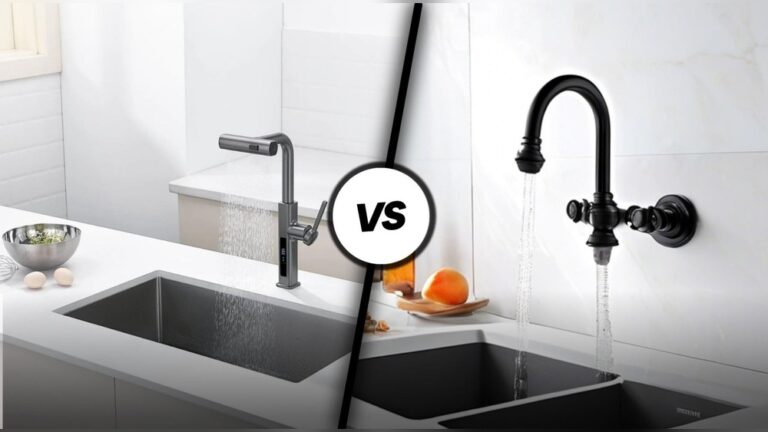
2 Hole Vs 3 Hole Kitchen Faucet: Which Is Best for Your Home?
Choosing a kitchen faucet seems simple at first. But once you start shopping, you’ll discover a key detail: the number of holes in your sink matters—a lot. The main options are 2 hole and 3 hole kitchen faucets. Which one is right for you? The answer depends on your needs, your kitchen style, and even your installation skills. Understanding the differences will save you time, money, and frustration.
Many homeowners don’t realize that the faucet and the sink must match. If you pick the wrong combination, you could face unexpected costs, extra work, or a design that just doesn’t look right. This article explains everything you need to know about 2 hole vs 3 hole kitchen faucets.
You’ll learn the basics, see real-life examples, compare pros and cons, and get expert tips on choosing the best option for your kitchen.
What Does “hole” Mean In Kitchen Faucets?
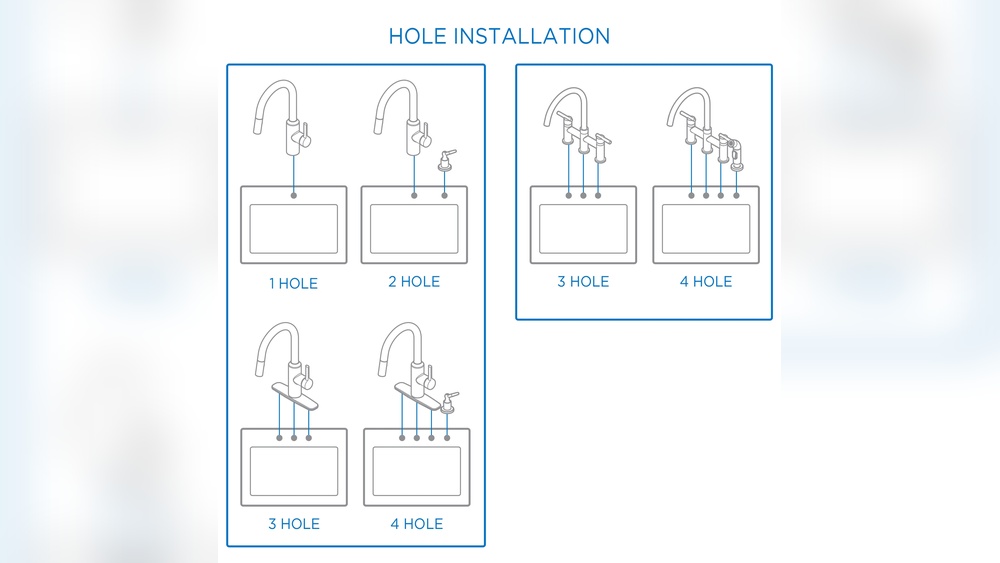
When you see “2 hole” or “3 hole” for a kitchen faucet, it describes the number of openings in your sink or countertop for installing the faucet and any extras (like handles or soap dispensers).
- 1 hole: Usually for a single-handle faucet with no extras.
- 2 hole: For a faucet and a separate feature (often a sprayer or a side handle).
- 3 hole: For a faucet with two handles (hot and cold) or a faucet plus two extras.
A single bowl sink may have one to four holes, depending on design and age. Newer sinks often have fewer holes for a cleaner look.
2 Hole Kitchen Faucet: What Is It?
A 2 hole kitchen faucet means the faucet system requires two separate holes in the sink or countertop. Usually, one hole is for the main faucet body. The second hole is for an extra feature. The most common setups are:
- Faucet plus side sprayer: The main faucet in one hole, sprayer in the second.
- Faucet plus soap dispenser: The faucet and a built-in soap pump.
- Faucet plus filtered water tap: The main faucet and a small tap for filtered drinking water.
This style is popular in both traditional and modern kitchens. It allows you to add a feature without overwhelming the sink area.
Advantages Of 2 Hole Faucets
- Simple installation: Fewer parts mean easier setup.
- Cleaner appearance: Less clutter on the sink.
- Flexibility: You can choose what to put in the second hole (sprayer, dispenser, etc. ).
- Lower cost: Fewer parts can mean a cheaper faucet and less labor.
When A 2 Hole Faucet Makes Sense
- You want a side sprayer but not double handles.
- Your sink only has two holes.
- You like a simple, clean look.
- You want to upgrade from a 1 hole faucet without major work.
Common Mistake
Many people try to install a 2 hole faucet into a 3 or 4 hole sink without covering the extra holes. This leaves gaps, which can look bad and let water leak under the sink. Always use a deck plate (a wide metal piece) to cover unused holes, or choose accessories to fill them.
3 Hole Kitchen Faucet: What Is It?
A 3 hole kitchen faucet needs three holes to install correctly. This design is most common for:
- Traditional two-handle faucets: One for hot water, one for cold, and a central spout.
- Faucet plus two extras: For example, a central faucet, a side sprayer, and a soap dispenser.
Many older sinks and classic kitchens use this setup. It’s also common in commercial kitchens, where flexibility matters.
Benefits Of 3 Hole Faucets
- Better temperature control: Separate handles for hot and cold water.
- Customizable: More holes mean more options—sprayers, dispensers, or even a filtered water tap.
- Classic look: Fits vintage and farmhouse kitchen styles.
- Easier repairs: If one handle breaks, you can replace just that part.
When To Choose A 3 Hole Faucet
- Your sink already has three holes.
- You want separate hot and cold controls.
- You need a side sprayer and a soap dispenser.
- You like a traditional or commercial look.
Common Mistake
Some buyers think all 3 hole faucets are the same. In reality, hole spacing (called “centerset” or “widespread”) matters. Always measure the distance between holes before buying a faucet.
Key Differences Between 2 Hole And 3 Hole Kitchen Faucets
Understanding the practical differences helps you avoid costly mistakes. Here’s a direct comparison:
| Feature | 2 Hole Faucet | 3 Hole Faucet |
|---|---|---|
| Number of Handles | Usually single handle | Usually two handles |
| Installation | Quicker, simpler | More steps, more precise |
| Accessories | One extra (sprayer, etc.) | Two extras possible |
| Style | Modern, minimalist | Classic, traditional |
| Cost | Usually less expensive | Can be higher (more parts) |

Credit: www.wooshdrain.com
Installation: What You Need To Know
Installing A 2 Hole Faucet
You need a sink or countertop with exactly two holes. Most DIYers can install these in under an hour. The process:
- Turn off water supply.
- Remove old faucet and clean area.
- Place new faucet in first hole.
- Install accessory (sprayer, soap dispenser) in the second hole.
- Connect water lines and accessory hose.
- Check for leaks.
Installing A 3 Hole Faucet
This setup takes more time and care. Each hole must line up with the faucet parts. Steps include:
- Turn off water supply.
- Remove old faucet and clean.
- Place faucet spout in center hole.
- Attach hot and cold handles in the side holes.
- If using extras (like a sprayer), install them.
- Connect all hoses and check for leaks.
Important Tip
Old sinks may not fit modern faucets exactly. Measure hole size and spacing before you buy. Some faucets include adapter plates to help match older sinks.
Table: Installation Difficulty Comparison
| Faucet Type | Tools Needed | Typical Time | DIY Friendly? |
|---|---|---|---|
| 2 Hole | Basic wrenches, plumber’s tape | 30-60 minutes | Yes |
| 3 Hole | Wrenches, screwdrivers, possibly a basin wrench | 60-90 minutes | Yes, but more patience needed |
Design And Style Considerations
The look and feel of your kitchen matter. The faucet is one of the most-used tools in your home and a big part of your kitchen’s style.
2 Hole Faucet Styles
- Modern single-handle designs
- Pull-out or pull-down sprayers
- High-arc spouts
- Minimalist finishes (brushed nickel, matte black)
These faucets work well in newer kitchens with clean lines.
3 Hole Faucet Styles
- Two-handle bridge faucets
- Vintage cross handles
- Commercial-style designs
- Ornate finishes (oil-rubbed bronze, antique brass)
Perfect for farmhouse, vintage, or luxury kitchens.
Design Tip
If you love a certain faucet style but your sink holes don’t match, look for an adapter plate (escutcheon). This lets you use a 2 hole faucet in a 3 hole sink, or vice versa, by covering extra holes.

Credit: www.reddit.com
Functionality: What Can Each Faucet Do?
2 Hole Faucet Functionality
- Simple controls: Usually one handle for temperature and flow.
- Side sprayer or soap dispenser: Extra hole used for a useful feature.
- Easier cleaning: Fewer parts to trap dirt and grime.
3 Hole Faucet Functionality
- Separate hot and cold: Allows precise temperature control.
- Multiple accessories: Add both sprayer and soap dispenser.
- More parts for repairs: Individual handles can be serviced or replaced.
Non-obvious Insight
Some modern 2 hole faucets have integrated sprayers—the sprayer is built into the main faucet. This frees up the second hole for something else, like a filtered water tap.
Cost: What To Expect
Prices vary by brand, material, and features. But here are some general trends:
- 2 hole faucets: $60–$250 for standard models.
- 3 hole faucets: $80–$350 for quality models with two handles and extras.
Installation cost is usually $100–$250 for a plumber. Doing it yourself can save money, but mistakes (like leaks) can be costly.
Table: Sample Price Ranges
| Type | Basic Model | Mid-Range | Premium |
|---|---|---|---|
| 2 Hole | $60–$90 | $120–$180 | $200–$250 |
| 3 Hole | $80–$120 | $160–$250 | $280–$350 |
Pro tip: Don’t just compare faucet price. Consider plumber cost, extra parts (like hoses), and possible sink changes.
Common Scenarios: Which Faucet Fits Your Kitchen?
Upgrading An Old Sink
If your sink is old and has three holes but you want a modern look, you can:
- Use an adapter plate to install a 2 hole faucet.
- Replace the sink with a 2 hole model (more expensive).
- Fill the extra hole with a soap dispenser or filtered water tap.
Remodeling A Modern Kitchen
Modern kitchens often use 1 or 2 hole faucets for a minimalist style. If you want touchless or pull-down features, most are designed for 1 or 2 holes.
Buying A New Sink
Choose your faucet first, then pick a sink with matching holes—or buy a “customizable” sink with pre-punched holes you can knock out as needed.
Rental Properties
Choose simple, durable 2 hole or 3 hole faucets that are easy to repair. Tenants often prefer side sprayers for easy cleaning.
Real-world Example
A family with young children chose a 3 hole faucet with two handles. The separate handles made it easier for kids to control temperature safely. An older couple picked a 2 hole faucet with a pull-out sprayer for arthritis-friendly use.
Durability And Maintenance
- 2 hole faucets: Fewer parts, so less can break. Easy to clean around the base.
- 3 hole faucets: More parts means more potential leaks (especially at the handles). But individual parts are often easier to replace.
Regardless of the type, high-quality brands with ceramic disc valves last longer and leak less. Wipe down the faucet and handles regularly to prevent buildup.
Non-obvious insight: Hard water can cause extra wear on faucet parts. If you live in a hard water area, look for models with corrosion-resistant finishes.
Environmental Considerations
- Water-saving features: Both 2 and 3 hole faucets can include aerators and flow restrictors.
- Touchless options: More common for 1 or 2 hole faucets, but you can find 3 hole models too.
- Lead-free construction: Check for certifications, especially if you use the faucet for drinking water.
Reducing water waste is easier with single-handle (2 hole) faucets, since you can adjust temperature faster.
Which Is Better For You? Decision Checklist
Ask yourself:
- How many holes does your sink have? Don’t forget to check under any covers.
- Do you want a side sprayer or soap dispenser? Pick a faucet with enough holes.
- Do you prefer single or double handles? Double handles mean 3 holes.
- What’s your kitchen style? Modern or traditional?
- What’s your budget? More features mean higher cost.
- Are you installing it yourself? Fewer holes = easier DIY.
- Do you plan to upgrade in the future? Modular faucets (with removable handles/sprayers) offer more flexibility.
Popular Brands And Models
Some brands make both 2 and 3 hole faucets. Top choices include:
- Moen: Known for durability and good customer service.
- Delta: Wide range of styles and price points.
- Kohler: Modern designs and strong warranties.
- Pfister: Budget-friendly, easy to install.
- American Standard: Good for classic 3 hole setups.
Always read reviews and check for certifications (like WaterSense) before buying.
Mistakes To Avoid
- Ignoring hole spacing: Not all 3 hole sinks have the same distance between holes.
- Forgetting about extras: Don’t buy a faucet with a side sprayer if your sink has no extra hole.
- Skipping the deck plate: If you don’t cover unused holes, water can leak below.
- Choosing style over function: A beautiful faucet that’s hard to use isn’t a good investment.
- Not checking water pressure: Some fancy sprayers need higher pressure than old plumbing can provide.
Credit: www.houzz.com
Upgrading Or Converting: Is It Possible?
You can switch between 2 and 3 hole faucets in many cases. Here’s how:
- From 3 hole to 2 hole: Use a deck plate to cover the third hole.
- From 2 hole to 3 hole: You can drill another hole in some sinks, but this risks cracking—best done by a pro.
- Buying a new sink: Choose one with “knockout” holes for future upgrades.
Expert Tips For A Smooth Faucet Project
- Measure twice, buy once: Check hole size and spacing carefully.
- Keep instructions: Each brand is different—don’t guess.
- Use plumber’s tape: Prevent leaks at hose connections.
- Don’t overtighten: Too much force can crack your sink or faucet.
- Check for local codes: Some areas require certain types of valves or backflow preventers.
If you’re unsure, a licensed plumber can install most faucets in under two hours.
Sustainability: Think Long Term
A high-quality faucet saves water and lasts years. Cheap models can leak, waste water, and need replacing often. Look for:
- Brass or stainless steel construction
- Ceramic disc valves
- WaterSense or equivalent certification
For more detail on water-saving faucets, check the EPA WaterSense Program.
Frequently Asked Questions
What If My Sink Has More Holes Than My New Faucet Needs?
You can use a deck plate to cover extra holes, or install accessories like a soap dispenser or filtered water tap to fill them.
Can I Convert A 3 Hole Sink To Fit A 2 Hole Faucet?
Yes, most 2 hole faucets come with a wide base (deck plate) to cover the third hole. Alternatively, you can buy a separate deck plate.
Are Two-handle (3 Hole) Faucets Less Efficient Than Single-handle (2 Hole) Faucets?
Single-handle faucets often let you adjust temperature faster, which can save water. But modern two-handle faucets are also efficient if you use them correctly.
Is A Side Sprayer Better Than A Pull-down Faucet?
Side sprayers (found in 2 or 3 hole setups) are easier to repair and replace. Pull-down faucets (usually 1 or 2 hole) save space and are more common in modern kitchens.
How Do I Know If A Faucet Will Fit My Sink?
Measure the distance between the centers of each hole and check the faucet’s installation requirements. Always compare your sink’s specifications with the faucet before buying.
A well-matched kitchen faucet is more than a style choice—it’s about function, durability, and comfort. Whether you choose a 2 hole or 3 hole kitchen faucet, understanding the differences will help you make a decision you’ll be happy with for years. Don’t rush: measure carefully, think about your real needs, and choose quality over the lowest price. With the right faucet, your kitchen will work better and look great every day.