Moen Vs Pfister Faucets: Which Brand Should You Choose?
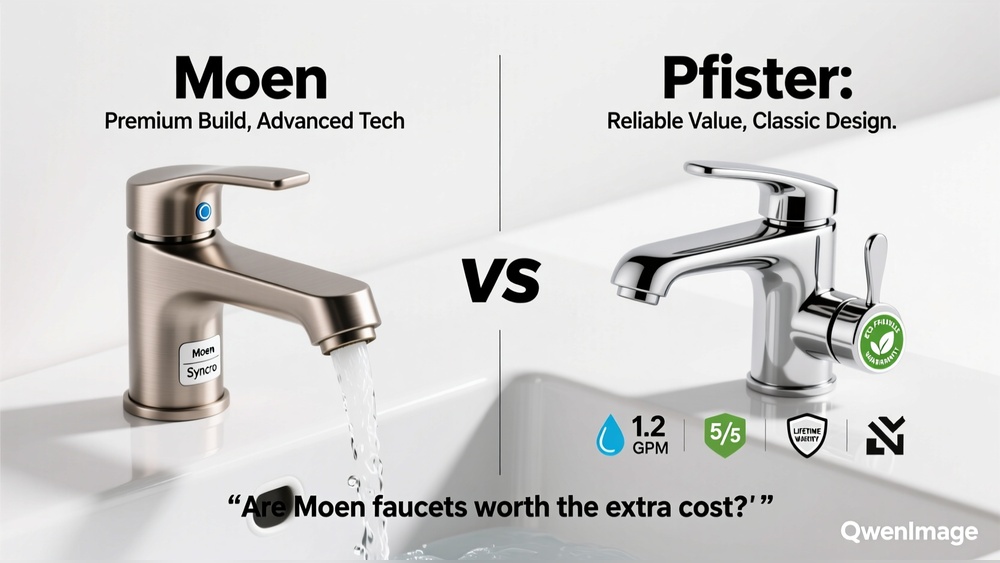
Choosing the right faucet for your kitchen or bathroom is more important than many people think. A faucet isn’t just a piece of hardware—it’s something you touch and use every single day. If you’re searching for a new faucet, you’ve probably seen two popular brands: Moen and Pfister. Both have been trusted for years, but which one fits your needs best? This article will give you a clear, side-by-side look at Moen vs Pfister faucets, so you can make a confident decision for your home.
Brand Backgrounds
Understanding where a company comes from tells you a lot about its products and values.
Moen
Moen started in 1937 when Al Moen invented the single-handle faucet. Over the years, Moen grew into a leader in faucet innovation and design. Today, the company is known for combining style, durability, and ease of use. Moen is part of Fortune Brands Home & Security, a large company in the United States.
Pfister
Pfister, once called Price Pfister, began even earlier, in 1910. The brand is famous for affordable yet stylish faucets that fit many budgets. Pfister is now owned by Spectrum Brands and is a common sight in homes across North America.
Quick Insight: Many people believe Moen is always more expensive, but Pfister’s top-tier models can sometimes match Moen’s prices. Don’t assume price by brand alone—always compare models directly.
Design And Aesthetics
A faucet’s look matters. It should fit your style and make your kitchen or bathroom feel complete.
Moen’s Design Approach
Moen focuses on modern, minimalist lines. Most Moen faucets look sleek, with simple curves or bold, geometric shapes. You’ll see finishes like:
- Spot Resist Stainless (hides fingerprints well)
- Matte Black
- Polished Chrome
- Brushed Nickel
Moen also offers many handle types, including motion sensors and touchless options.
Pfister’s Design Approach
Pfister has a wider range of styles. You can find traditional, vintage, and ultra-modern looks. This makes Pfister a good pick if your home has a unique or classic feel. Common finishes include:
- Tuscan Bronze
- Polished Nickel
- Matte Black
- Stainless Steel
Pfister often uses more decorative details—think curved handles and ornate bases.
Non-Obvious Insight: Some Moen finishes, like Spot Resist, are designed for easy cleaning and fingerprint resistance. Pfister’s Tuscan Bronze can show water spots more quickly but looks beautiful in traditional kitchens.
Product Range And Variety
Both brands have options for kitchens, bathrooms, bars, and laundry rooms, but there are some key differences.
Moen’s Product Line
Moen has hundreds of faucet models. They offer:
- Single-handle and double-handle designs
- Pull-down and pull-out spray heads
- Touchless and smart faucets
- Matching accessories (soap dispensers, water filtration)
Moen also covers a wide price range—from entry-level to premium models with advanced tech like voice control.
Pfister’s Product Line
Pfister provides a large selection too, but their focus is on affordable choices. You’ll find:
- Single and double handle faucets
- Pull-down and pull-out options
- Filtered water faucets
- Some touchless models (but fewer than Moen)
Pfister’s line is slightly smaller but has more budget-friendly picks.
Practical Tip: If you want the newest technology, Moen usually releases it first. Pfister often adds new features after they become popular.
Build Quality And Materials
A faucet’s material affects how long it lasts and how well it resists leaks or corrosion.
Moen’s Materials
Most Moen faucets use solid brass or stainless steel inside. These metals resist corrosion and handle high water pressure. The outside finishes are thick and bonded for better durability.
Some entry-level Moen models use zinc alloy (less expensive but not as strong as brass).
Pfister’s Materials
Pfister uses a mix of brass, zinc, and plastic parts. Their mid- and high-end models often use brass, but budget lines use more zinc or plastic. This can mean a shorter lifespan, especially in busy kitchens.
Data Table: Common Faucet Materials
| Material | Moen | Pfister | Durability |
|---|---|---|---|
| Solid Brass | High-end & mid-range | High-end & some mid-range | Excellent |
| Stainless Steel | Some models | Few models | Very Good |
| Zinc Alloy | Low-end models | Mid- & low-end models | Moderate |
| Plastic | Rarely | Common in budget models | Poor |
Confidence Booster: For heavy daily use (big families, rental properties), choose a faucet with a brass body—whichever brand you buy.
Technology And Special Features
Today’s faucets do more than control water flow. Let’s see how Moen and Pfister add tech to their products.
Moen’s Innovations
Moen leads in touchless and smart faucet technology. Their “MotionSense” line lets you turn water on or off with a wave of your hand. Some Moen models even connect to Wi-Fi and voice assistants (like Alexa or Google Assistant) for features like:
- Measured water dispensing (“pour one cup”)
- Setting temperature by voice
- Custom presets for family members
Moen also uses Power Boost spray for faster cleaning and Reflex hose systems for easier pull-down use.
Pfister’s Innovations
Pfister’s main tech is the React touchless system (fewer models than Moen). Pfister also offers:
- Pforever Seal ceramic disc valves (reduce leaks)
- AccuDock (keeps spray head firmly in place)
- TiteSeal deck plate for tool-free installation
While not as advanced as Moen’s smart features, Pfister focuses on reliability and easy setup.
Non-Obvious Insight: Moen’s smart faucets need power (batteries or an outlet). Plan for this when installing.
Installation And Diy Friendliness
Most people want a faucet they can install themselves, or at least with little trouble.
Moen
Moen makes DIY installation easy. Their “Duralock” quick-connect system allows for snap-in hose connections. Most Moen kitchen faucets include everything you need except tools. Instructions are clear, and online videos are available.
Pfister
Pfister’s TiteSeal system removes the need for plumbers’ putty, making installation less messy. Their instructions are simple, and many models have color-coded hoses. However, some users report parts feel lightweight compared to Moen.
Practical Tip: Always check your sink’s number of mounting holes before choosing a faucet. Both brands offer options for 1, 2, 3, or 4-hole sinks, but adapters may be needed.

Credit: bathroomsupplier.ca
Warranty And Customer Support
A good warranty shows a company stands behind its products.
Moen Warranty
Moen offers a Lifetime Limited Warranty on their faucets for the original owner. This covers leaks, drips, and finish defects. Moen is known for fast, no-hassle replacements or repairs.
Pfister Warranty
Pfister also gives a Lifetime Warranty (Pforever Warranty) on the function and finish of their faucets. They will send free replacement parts if anything fails. Pfister’s customer service is generally helpful, but some users say response times can be slower.
Data Table: Warranty Comparison
| Brand | Warranty Length | Coverage | Ease of Service |
|---|---|---|---|
| Moen | Lifetime (original owner) | Leaks, drips, finish | Very easy |
| Pfister | Lifetime (original owner) | Function, finish | Easy, but sometimes slower |
Confidence Booster: Both brands have some of the best warranties in the business. Save your proof of purchase to make any claims faster.
Price Range And Value
Let’s talk about cost—one of the biggest factors for most buyers.
Moen Pricing
Moen faucets start around $70–$100 for basic models. Most mid-range kitchen faucets cost $150–$300. High-tech or designer models can go up to $600–$900.
Pfister Pricing
Pfister’s entry-level faucets start at $40–$70. Mid-range picks are usually $100–$200. Their most expensive models (with advanced features) are $300–$500.
Price Table: Typical Kitchen Faucet Cost
| Brand | Entry Level | Mid-Range | High-End |
|---|---|---|---|
| Moen | $70–$100 | $150–$300 | $600–$900 |
| Pfister | $40–$70 | $100–$200 | $300–$500 |
Non-Obvious Insight: Sometimes, Pfister’s best models cost as much as Moen’s mid-range. Don’t judge a faucet only by price—check materials and features.
Water Efficiency And Environmental Impact
Saving water is good for the planet and your bills.
Moen’s Water-saving Features
Most Moen faucets are WaterSense certified. This means they use 1.5 gallons per minute (gpm) or less, meeting EPA standards. Moen’s aerators keep water flow strong while using less.
Pfister’s Water-saving Features
Pfister also offers many WaterSense certified models. Some use as little as 1.2 gpm. Pfister highlights eco-friendly options clearly on their website and packaging.
Practical Tip: Always look for the WaterSense label. It means you’ll save water without losing performance.
Real-world User Experience
Let’s see what actual users say after living with Moen and Pfister faucets.
Moen Owners
Most Moen users praise their faucets for:
- Smooth handle operation
- Reliable water flow
- Long-lasting finish
- Good support if something goes wrong
Some complaints include the cost of replacement parts for old models and occasional leaks in lower-end products.
Pfister Owners
Pfister fans like the affordable price and stylish looks. Many people say installation is easy. Most users are happy with performance, but a few mention:
- Plastic parts in budget models wearing out
- Occasional drips after a year or two
- Some finishes (like bronze) showing wear faster
Non-Obvious Insight: Many users install Pfister faucets in rental properties because they balance price and style. Moen is often picked for homes where long-term durability matters most.
Credit: www.alibaba.com
Which Brand Is Right For You?
So, should you pick Moen or Pfister for your next faucet? Here’s a simple breakdown:
- Choose Moen if you want:
- The latest technology (touchless, smart, voice control)
- Long-term durability
- Sleek, modern designs
- A wide choice of finishes
- Choose Pfister if you want:
- Classic or decorative styles
- Lower prices or need to buy multiple faucets
- Easy DIY installation
- Reliable performance for less busy kitchens
Practical Scenario: If you’re remodeling your main kitchen and want a faucet that’s likely to last 10+ years, Moen is a safer bet. If you’re updating a guest bathroom or a rental and need to keep costs low, Pfister is a smart choice.
Frequently Asked Questions
Are Moen Faucets Worth The Higher Price?
Moen faucets often cost more because they use better materials and offer more advanced features. If you want your faucet to last a decade or more, the extra cost can be worth it. For budget projects, Pfister is still a solid choice.
Is Installation Difficult For Moen Or Pfister Faucets?
Both brands design their faucets for easy DIY installation. Moen uses quick-connect hoses, while Pfister’s TiteSeal system makes setup simple. Still, if you’re not comfortable with plumbing, it’s wise to call a professional.
Which Brand Has Better Customer Support?
Moen is known for fast, responsive customer service. Pfister also supports their products well, but some users report slower response times. Both brands honor their warranties if you keep your proof of purchase.
Do Moen Or Pfister Faucets Leak More Often?
Leaks can happen with any brand, but Moen’s use of ceramic disc valves reduces leaks over time. Pfister’s Pforever Seal is also reliable, but budget models with more plastic parts may develop drips sooner.
Where Can I Read More About Faucet Standards And Certifications?
You can learn about WaterSense and faucet certifications at the official EPA WaterSense website. This helps you pick faucets that save water and perform well.
Choosing between Moen and Pfister doesn’t have to be confusing. Focus on your needs—style, features, and budget. Both brands have strengths, but with this guide, you can buy a faucet you’ll love every day.

Credit: www.moen.com