Male Vs Female Faucet Aerator: Key Differences and How to Choose
If you have ever replaced a faucet aerator, you may have noticed that some aerators are called “male” and others “female. ” At first, these terms can be confusing, especially if English is not your first language or you have not done much plumbing work.
Yet, choosing the right aerator is important for fixing leaks, improving water flow, and saving water. A wrong choice can lead to annoying drips, poor water pressure, or a part that does not fit at all.
This article will guide you through everything you need to know about male vs female faucet aerators. You’ll learn what these terms mean, how to tell the difference, and why it matters. We’ll compare their uses, installation, and compatibility with different faucets. Along the way, you’ll find practical tips, common mistakes to avoid, and answers to questions many beginners have. By the end, you’ll feel confident handling aerators for your kitchen or bathroom faucet—whether you’re doing a quick swap or planning a bigger upgrade.
What Is A Faucet Aerator?
A faucet aerator is a small device that attaches to the end of a faucet. Its main job is to mix air with water, making the flow smoother and saving water. Aerators help prevent splashing, improve water pressure, and filter out small debris. Most modern faucets have an aerator, but their size, style, and threading can be different.
Main Functions Of Faucet Aerators
- Water Conservation: By mixing air with water, aerators reduce water usage without lowering the pressure you feel.
- Splash Reduction: The aerator breaks the water into tiny streams, making the flow gentle and less likely to splash.
- Filtering Debris: Many aerators catch sand or small particles, keeping the water cleaner.
- Improved Pressure: In homes with low pressure, a good aerator can make water feel stronger.
Aerators are usually made from metal or plastic. They screw onto the faucet spout and are easy to replace with a few simple tools.
Male Vs Female Faucet Aerator: The Key Differences
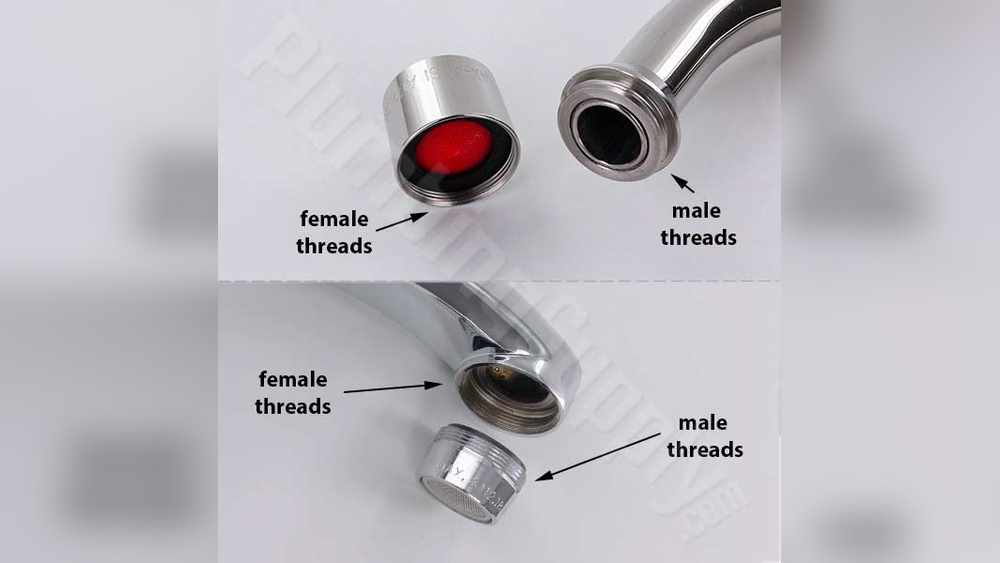
The words “male” and “female” describe the threading—the way the aerator attaches to the faucet.
What Is A Male Faucet Aerator?
A male aerator has threads (the spiral grooves) on the outside. It screws into a faucet spout that has threads on the inside.
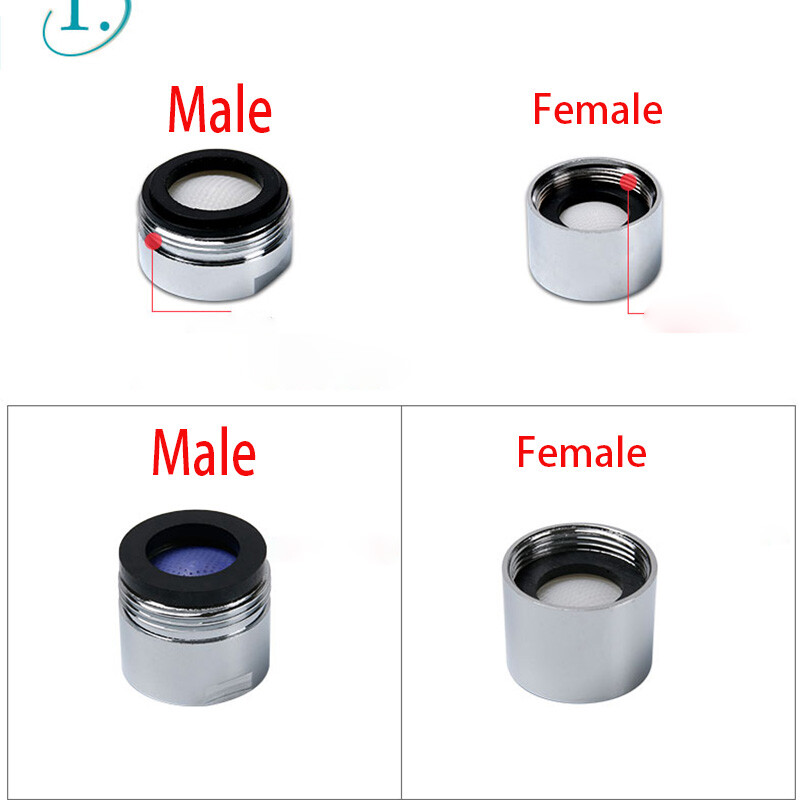
How to recognize a male aerator:
- The aerator’s metal or plastic threads are visible on the outside.
- When you hold it up, you can see the threads wrap around the outside edge.
- The faucet itself has threading inside the spout.
Common use: Older faucets, commercial sinks, and some kitchen faucets often use male aerators.
What Is A Female Faucet Aerator?
A female aerator has threads on the inside. It screws onto a faucet spout with threads on the outside.
How to recognize a female aerator:
- The threads are hidden inside the cylinder of the aerator.
- The outside is smooth; you can only see threads if you look inside.
- The faucet’s spout has threading on the outside.
Common use: Many modern bathroom and kitchen faucets use female aerators.
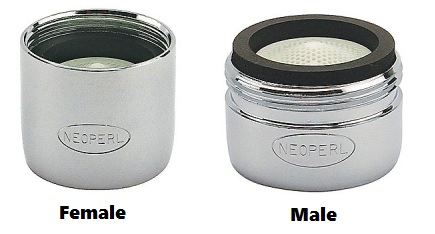
Quick Visual Comparison
Here’s a simple way to remember:
- Male aerator: Threads outside, fits inside the faucet.
- Female aerator: Threads inside, fits over the faucet.
Credit: blog.conservationmart.com
Why Does Male Vs Female Matter?
Choosing the right type of aerator is important for several reasons:
- Fit and Leak Prevention: The wrong type will not attach, or it may leak water.
- Functionality: A proper seal ensures good water pressure and saves water.
- Replacement and Upgrades: If you want to switch to a water-saving aerator, you need the correct type.
Many people buy the wrong aerator because they do not check the threading. This mistake wastes time and money, and you may have to go back to the store.
How To Identify Your Faucet’s Aerator Type
Knowing which aerator you need is simple if you follow these steps:
- Look at the Faucet Spout
- Threads on the inside of the spout: You need a male aerator.
- Threads on the outside of the spout: You need a female aerator.
- Check the Old Aerator
- Remove the aerator by turning it counterclockwise.
- Threads on the outside = male; threads on the inside = female.
- Measure the Size
- Aerators come in different diameters, usually in inches or millimeters.
- Standard sizes: Regular (15/16” male, 55/64” female), Junior, Tom Thumb.
- Use a ruler or caliper for a precise measurement.
- Bring the Aerator to the Store
- If unsure, take the old aerator with you to match the thread and size in person.
Non-obvious insight: Sometimes, faucets from outside North America use metric sizes or special threads. Always check your faucet brand and country of origin.

Credit: www.amazon.com
Standard Sizes And Compatibility
Most homes use standard aerator sizes, but there are exceptions. Here is a comparison of common aerator sizes and their compatibility:
| Type | Diameter (inches) | Common Use | Thread Location |
|---|---|---|---|
| Male Regular | 15/16” (24mm) | Older kitchen/bathroom faucets | Outside |
| Female Regular | 55/64” (22mm) | Modern faucets | Inside |
| Junior Male | 13/16” (21mm) | Small spouts, some bathroom faucets | Outside |
| Junior Female | 3/4” (19mm) | Specialty faucets | Inside |
| Tom Thumb | M18x1mm or M16x1mm | Very small faucets | Varies |
Tip: If you’re not sure about the size, universal adapters are available, but they may not fit every faucet. Always try to match the original size when possible.
Installing A Male Or Female Faucet Aerator
Replacing a faucet aerator is a simple task, but there are a few steps to ensure a good fit and avoid leaks.
Steps For Installation
- Remove the Old Aerator
- Use your hand or a soft-jaw pliers to unscrew it. Turn counterclockwise.
- If stuck, wrap a cloth around the aerator to protect the finish and use pliers gently.
- Clean the Faucet Spout
- Wipe away dirt, old debris, or mineral buildup.
- A toothbrush can help clean threads.
- Insert New Washer (if needed)
- Most aerators come with a washer. Make sure it is in place.
- A missing washer can cause leaks.
- Install the New Aerator
- For a male aerator: Insert into the spout and turn clockwise.
- For a female aerator: Place over the spout and turn clockwise.
- Hand-tighten first. If needed, use pliers with a cloth for a final snug fit.
- Test for Leaks
- Turn on the faucet slowly.
- If water leaks around the aerator, tighten a bit more or check the washer.
Non-obvious insight: Sometimes, minerals can make threads rough. If the new aerator doesn’t screw in smoothly, check for leftover debris or corrosion.
Advantages And Disadvantages Of Male And Female Aerators
Each type has its strengths and weaknesses. Let’s compare them side by side for clarity.
| Feature | Male Aerator | Female Aerator |
|---|---|---|
| Ease of Replacement | Easy for inside-thread spouts | Easy for outside-thread spouts |
| Availability | Common in older/commercial faucets | More common in new home faucets |
| Risk of Leaks | Low if matched correctly | Low if matched correctly |
| Water Saving Features | Both types available with flow restrictors | Both types available with flow restrictors |
| Adapter Use | Adapters available for conversion | Adapters available for conversion |
Key point: The main difference is the threading. Both types now come with water-saving and anti-splash features.
When Should You Use Each Type?
The main rule: match the aerator to the faucet threads. But there are situations where you might need to convert or adapt.
Use A Male Aerator When:
- Your faucet spout has threads inside.
- You are replacing an old male aerator.
- The faucet is commercial, utility, or older style.
Use A Female Aerator When:
- Your faucet spout has threads outside.
- You are replacing an old female aerator.
- The faucet is modern, bathroom, or residential kitchen.
Adapters And Special Cases
If you want to use a device (like a portable dishwasher or a water filter) that only fits the opposite thread, you can use an adapter.
- Male to Female Adapter: Screws into a male spout so you can use a female aerator.
- Female to Male Adapter: Screws onto a female spout so you can use a male aerator.
Adapters are cheap and easy to find at hardware stores. But be careful: too many adapters can lower water pressure or cause leaks.
Credit: www.ebay.com
Common Mistakes And How To Avoid Them
Many first-time aerator buyers make mistakes that lead to frustration. Here are the most common pitfalls:
- Not Checking Thread Type
- Always check if your faucet has inside or outside threads.
- Guessing leads to buying the wrong aerator.
- Ignoring Size
- Aerators come in different diameters. Bring the old one to compare.
- If the size is wrong, water will leak or the aerator won’t fit.
- Over-Tightening
- Tightening with pliers can damage threads or the faucet finish.
- Always start hand-tightening, then use a tool gently if needed.
- Using the Wrong Washer
- A missing or damaged washer causes leaks.
- Always check the washer is seated correctly in the aerator.
- Neglecting Debris
- Leaving sand or rust in the threads makes new aerators hard to install.
- Clean the faucet spout before putting in the new aerator.
Practical tip: If your faucet is very old, the threads might be worn down. In this case, you may need to replace the whole faucet or use plumber’s tape for a temporary fix.
Water-saving And Specialty Aerators
Both male and female aerators are available with extra features:
- Low-flow models: These reduce water use to as little as 0.5 gallons per minute, which saves money on water bills.
- Swivel or dual-spray aerators: Useful in kitchens for rinsing dishes or vegetables.
- Anti-lime or self-cleaning: Great in areas with hard water, these aerators resist mineral buildup.
- Laminar flow: Provides a clear, non-bubbly stream, often used in hospitals.
Interesting data: According to the EPA, replacing old aerators with WaterSense models can save up to 700 gallons of water per year in a typical household.
Cleaning And Maintenance
Aerators, whether male or female, need regular cleaning to work well.
Steps To Clean An Aerator
- Remove the Aerator: Unscrew using hand or pliers if tight.
- Disassemble: Take apart the screen and washer.
- Soak in Vinegar: Place parts in vinegar for 30 minutes to remove mineral buildup.
- Scrub: Use a small brush or old toothbrush to clean parts.
- Rinse and Reassemble: Put the aerator back together and reinstall.
Tip: Clean your aerator every six months, or more often in areas with hard water.
Male Vs Female Aerator In Different Applications
Different rooms and uses may demand different aerator types.
Kitchen Faucets
- Most kitchen faucets use female aerators, but older models may use male.
- Swivel or sprayer aerators are popular in kitchens.
Bathroom Faucets
- Many bathroom faucets use male aerators, especially in older homes.
- Low-flow, splash-free aerators are common.
Utility And Commercial Sinks
- These often use male aerators for heavy-duty use.
- Specialty aerators, like vandal-proof designs, may be needed.
Insider tip: If you want to attach a water filter or portable dishwasher, check the aerator type first. Many accessories only fit a certain thread.
Price And Availability
Aerators are affordable, usually costing $3 to $10 for a basic model. Specialty or water-saving aerators can cost $10 to $30. Both male and female types are widely available at hardware stores, online, and plumbing suppliers.
- Male aerators: Sometimes a bit harder to find in modern stores.
- Female aerators: More options and styles for home faucets.
Note: Always check for certifications like WaterSense or NSF if you want tested water-saving and safety features.
Environmental Impact
Choosing the right aerator helps the environment:
- Water-saving aerators (both male and female) can cut household water use by 30–50%.
- This reduces demand on local water supplies and lowers your water bill.
- Less hot water use means lower energy bills and carbon footprint.
Example: If a family replaces three old aerators with new low-flow ones, they can save enough water each year to fill a small backyard pool.
For more on water-saving fixtures, see the EPA’s guide at EPA WaterSense.
How To Choose The Right Faucet Aerator
Here’s a simple process:
- Check Thread Type: Is your faucet spout threaded inside or outside?
- Measure Diameter: Use a ruler or caliper; match the old aerator if possible.
- Decide on Features: Do you want water-saving, swivel, or anti-clog features?
- Buy from a Trusted Brand: Look for reputable manufacturers.
- Install and Test: Make sure there are no leaks and the flow is good.
Avoid buying unknown brands online, as quality and thread accuracy can vary.
Real-world Example
Let’s say you have a kitchen faucet, and the water is splashing everywhere. You remove the old aerator and find threads on the inside of the faucet spout. You need a male aerator. At the store, you see both regular and water-saving options. You buy a 1.5 gallons per minute male aerator, install it, and the splashing stops. Water is smoother, and your water bill goes down.
A friend has a new bathroom faucet with threads on the outside of the spout. They need a female aerator. They choose a low-flow model and install it in minutes. Both get the results they want, but the key is matching the thread type.
Frequently Asked Questions
What Is The Main Difference Between A Male And Female Faucet Aerator?
The main difference is thread location. A male aerator has threads on the outside and fits into a faucet with inside threads. A female aerator has threads on the inside and screws onto a faucet with outside threads.
Can I Use An Adapter If I Have The Wrong Aerator Type?
Yes, adapters are available to convert male to female or female to male threads. Make sure the adapter matches the size and fits tightly to avoid leaks.
How Do I Measure My Faucet Aerator Size?
Remove the old aerator and measure the diameter across the threads. Most home faucets use 15/16” (male) or 55/64” (female). Metric sizes are found on some imported faucets.
Do Male And Female Aerators Affect Water Pressure?
Both types can be bought with high- or low-flow designs. The type itself does not control pressure; the internal parts (flow restrictor, screen) do. Choose an aerator with the right flow rate for your needs.
How Often Should I Clean Or Replace A Faucet Aerator?
Clean your aerator every six months or sooner if you see reduced flow. Replace it if cleaning does not fix the problem or if the threads are damaged.
Choosing between a male and female faucet aerator is simple once you know where to look. Always match the thread type to your faucet, measure carefully, and consider water-saving options. A small part like an aerator can make a big difference in comfort, water quality, and savings. With the tips and comparisons in this guide, you’ll be ready to pick the right aerator for any faucet in your home.