
Are All Kitchen Faucets the Same Size? What You Need to Know
If you’re planning to update your kitchen or fix a leaky faucet, you might ask: Are all kitchen faucets the same size? This question seems simple, but the answer is not. Many people discover too late that faucet sizes and fittings are not always standard. Buying the wrong size can lead to frustrating returns, costly mistakes, and wasted time. Understanding faucet sizes is key to a smooth kitchen update, whether you are a homeowner, renter, or contractor. Let’s explore what really matters about kitchen faucet sizes, the types you’ll find, and how to make sure you get the right fit for your kitchen.
What Does “kitchen Faucet Size” Really Mean?
When people talk about kitchen faucet size, they might mean several different things. Some think of the height or reach of the faucet, while others worry about the holes in the sink or the size of the connections under the counter. Here are the main aspects that matter:
- Faucet height: How tall the faucet stands above the sink.
- Spout reach: How far the faucet extends over the sink.
- Mounting hole size: The width of the hole(s) in the sink or countertop.
- Number of mounting holes: Sinks may have 1, 2, 3, or 4 holes.
- Connection size: The plumbing under the sink that attaches to the faucet.
Each of these sizes can vary from faucet to faucet. So, no, not all kitchen faucets are the same size. But they do follow some common standards.
Standard Kitchen Faucet Sizes And Variations
Most kitchen faucets are designed to fit common sinks, but there are important differences. Let’s break down the most critical dimensions.
Mounting Hole Size
Most kitchen sink holes are between 1⅜ inches to 1½ inches (about 34mm–38mm) in diameter. However, some sinks, especially older or custom models, may be larger or smaller. Faucets typically have mounting hardware that fits this range, but it’s important to measure your sink holes before buying.
Number Of Holes
Kitchen sinks usually have 1 to 4 holes. Here’s what they’re for:
- 1 hole: For a single-handle faucet (sometimes with a pull-out sprayer included).
- 2 holes: For a faucet plus a separate sprayer or soap dispenser.
- 3 holes: For a faucet with separate hot and cold handles.
- 4 holes: For a faucet, side sprayer, soap dispenser, or filtered water tap.
Some faucets come with a deck plate (a metal base) to cover extra holes if your sink has more holes than you need.
Faucet Height And Spout Reach
- Standard height: Most kitchen faucets are 8 to 18 inches tall. High-arc styles can reach up to 20 inches.
- Spout reach: The spout typically extends 8 to 10 inches from the center of the faucet base. Some commercial or pull-down styles reach further.
Connection Size
In the United States, the water supply lines connecting the faucet to plumbing are usually ½ inch in diameter. The threads and nuts are designed to fit this size, but adapters are available if your plumbing is different.
Types Of Kitchen Faucets And Their Size Differences
Not all kitchen faucets are built the same way. The type of faucet you choose affects size and fit.
Single-hole Faucets
These are simple, modern, and require just one hole in the sink or countertop. They combine hot and cold water into one handle. Their bases are usually small and fit standard hole sizes.
Centerset Faucets
These have the spout and handles combined on a single base. They need three holes spaced 4 inches apart (from center to center of each hole). They are common in both kitchens and bathrooms.
Widespread Faucets
These separate the hot, cold, and spout parts. They need three holes spaced 8 inches apart or more. They offer a stylish look and are often used in larger sinks.
Bridge Faucets
Bridge faucets have two handles connected by a horizontal bar, or “bridge. ” They require two or three holes, depending on the model. Sizes can vary more with these classic designs.
Pull-down And Pull-out Faucets
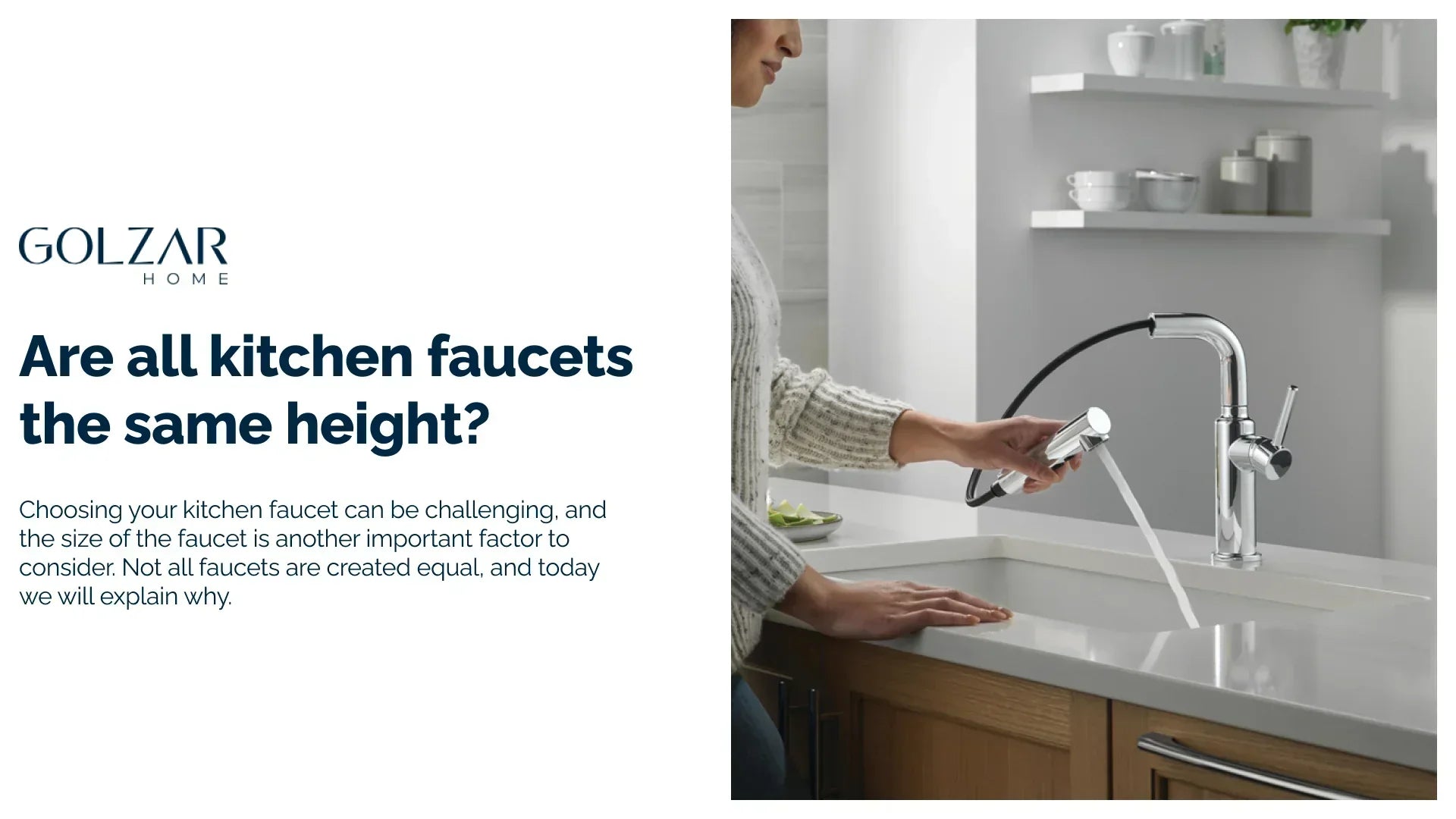
These modern faucets have a spray head that pulls out or down. They fit in standard single-hole or three-hole sinks. But the spout height and reach are often larger, so check for clearance above and behind your sink.
Wall-mounted Faucets
Wall-mounted faucets attach to the wall above the sink, not the countertop. They require plumbing in the wall and are common in commercial kitchens. The distance from the wall to the sink matters more than hole size for these.
Measuring Your Kitchen Sink For A New Faucet
To get the right faucet, you must know your sink’s measurements. Here’s how to avoid common mistakes:
- Count the holes: Look under and on top of your sink to see how many holes are present.
- Measure hole size: Use a ruler or caliper to check the diameter of each hole.
- Check hole spacing: For multiple holes, measure from the center of one hole to the next.
- Check clearance: Measure the space between the sink and the backsplash or window. High-arc faucets need more space behind and above.
- Measure spout reach: Make sure the faucet will reach near the center of your sink bowl.
Example Measurement
Say you have a three-hole sink with holes 8 inches apart. You can use a widespread or centerset faucet, but not a single-hole faucet without a deck plate.
Credit: bathroomsupplier.ca
Common Mistakes When Choosing Faucet Size
Many people make avoidable errors when buying a new kitchen faucet. Here are some of the most common:
- Ignoring hole count: Buying a single-hole faucet for a three-hole sink without a deck plate leaves ugly gaps.
- Not measuring clearance: High-arc faucets can hit shelves, windowsills, or cabinets above.
- Wrong connection size: Some older homes use ⅜-inch or ⅝-inch supply lines. You may need adapters for a ½-inch faucet.
- Choosing style over fit: A beautiful faucet is useless if it doesn’t fit your sink or plumbing.
- Assuming all sinks are standard: Some farmhouse or extra-deep sinks use nonstandard holes or spacing.
Are There Universal Faucets?
You might see some brands claim “universal fit.” This usually means the faucet comes with adapters or a deck plate to fit different hole counts or sizes. But truly universal faucets don’t exist. Always check the specific measurements before buying.
Credit: bathroomsupplier.ca
Comparing Kitchen Faucet Sizes: Examples
Here are some real-world examples to show the size differences between popular faucet types.
| Faucet Type | Mounting Holes | Hole Spacing | Height (inches) | Spout Reach (inches) |
|---|---|---|---|---|
| Single-Hole | 1 | N/A | 12–18 | 8–10 |
| Centerset | 3 | 4 | 8–14 | 7–9 |
| Widespread | 3 | 8+ | 8–16 | 7–10 |
| Pull-Down | 1 or 3 | N/A or 8 | 15–20 | 8–11 |
| Wall-Mounted | 2 | Varies | Varies | 8–12 |
As you can see, size can differ a lot based on type. Always check what your sink supports.
International Differences In Kitchen Faucet Sizing
If you live outside the United States or buy faucets from other countries, be careful: plumbing sizes and standards are different worldwide.
- In Europe, the standard connection is ⅜ inch (about 10mm).
- In the UK, you may find 15mm or ½ inch BSP (British Standard Pipe).
- Asian countries often use different thread sizes and fittings.
If you import a faucet, you may need adapters or even professional help. Sinks bought overseas may not match American faucets.
Adapters And Solutions For Nonstandard Sizes
Don’t panic if your sink or pipes aren’t standard. You have options:
- Deck plates: Cover extra holes for a clean look.
- Adapters: Connect different pipe sizes or threads.
- Custom drilling: Add holes to your countertop or sink (best left to pros).
- Flexible supply lines: These hoses can bend and adapt to unusual plumbing layouts.
However, these solutions add cost and complexity. It’s best to buy a faucet that matches your sink and plumbing whenever possible.
How To Choose The Right Kitchen Faucet Size
Picking the right size isn’t just about the hole. Here’s what you need to consider:
- Sink size: A big sink needs a faucet with a longer spout reach and possibly a higher arc.
- Countertop space: If your sink is close to a wall or window, you need a shorter or lower faucet.
- Number of holes: Match your faucet to your sink’s holes, or use a deck plate.
- Plumbing connections: Check your home’s supply line size and buy compatible hoses if needed.
- Personal needs: If you wash lots of big pots, a high-arc or pull-down faucet makes life easier.
Real-world Example: Replacing A Kitchen Faucet
Let’s say you want to replace an old centerset faucet. Here’s how you’d do it step by step:
- Turn off water: Shut the valves under the sink.
- Disconnect supply lines: Use a wrench to loosen the nuts.
- Remove old faucet: Unscrew mounting nuts and lift out the faucet.
- Clean the area: Scrub away old putty and grime.
- Check holes: Measure diameter and spacing (likely 3 holes, 4 inches apart).
- Choose replacement: Pick a centerset or single-hole faucet with a deck plate.
- Install new faucet: Follow the instructions, connect supply lines, and turn on the water.
This process is easy if the new faucet matches your sink. If not, you may need to buy adapters or hire help.
Data: Most Common Kitchen Faucet Sizes
Research shows that over 80% of kitchen sinks in the U.S. have holes between 1⅜ and 1½ inches, and use ½ inch supply lines. Single-hole and three-hole sinks are most common. High-arc pull-down faucets are the fastest-growing style, but not all fit older sinks.
What If Your Faucet Doesn’t Fit?
If you buy a faucet and it doesn’t match your sink or plumbing, you have options:
- Return or exchange: Most stores allow returns if unused.
- Buy adapters: For plumbing mismatches.
- Hire a plumber: For tough installations, especially wall-mounts or custom sinks.
- Modify the sink/counter: Only as a last resort.
Comparing Kitchen Faucet Height And Clearance
One overlooked issue is vertical clearance. Measure from the countertop to cabinets or windows. Some high-arc faucets need over 20 inches of clearance, but many kitchens have less.
| Faucet Style | Average Height (inches) | Minimum Clearance Needed (inches) | Notes |
|---|---|---|---|
| Low-Arc | 8–10 | 12 | Best for tight spaces |
| Mid-Arc | 12–15 | 16 | Fits most kitchens |
| High-Arc | 16–20 | 22+ | Needs extra space |
Always check for windowsills, shelves, or low cabinets before buying a tall faucet.

Credit: manorhousesinks.com
Important Insights About Kitchen Faucet Sizing
- Faucet fit isn’t just about holes. You must consider spout reach, height, and clearance for smooth everyday use.
- Not all deck plates are the same size. Some cover only small holes; others are wide. Check measurements carefully if you plan to cover holes.
Beginners often forget these two points and end up with a faucet that technically fits but is uncomfortable or awkward to use.
When Custom Faucets Or Sinks Are Needed
If you have a farmhouse sink, a commercial prep sink, or a vintage kitchen, you might need a custom faucet or special fittings. These are rare but important to recognize. If your sink has an unusual number of holes, nonstandard size, or a unique shape, consult a professional before buying.
Environmental Considerations
Modern kitchen faucets often include flow restrictors to save water. These do not usually affect the size or installation, but if you replace an old faucet, you may notice lower water pressure. If your home has low pressure already, look for faucets rated for low-pressure systems.
How To Avoid Size Problems When Buying Online
Buying online is convenient, but it’s easy to miss details about size. Here are some tips:
- Read the specs: Look for diagrams with measurements.
- Check return policies: In case the faucet doesn’t fit.
- Contact support: Ask for help if you’re not sure.
- Compare with your old faucet: Measure and match as closely as possible.
For extra confidence, check guides on trusted home improvement sites like Family Handyman.
Frequently Asked Questions
How Do I Know If A Faucet Will Fit My Sink?
Check the number of mounting holes, the diameter and spacing of the holes, and the size of the water connections. Measure your current faucet and compare with the new one’s specs.
Can I Use A Kitchen Faucet In A Bathroom Sink?
Most kitchen faucets are too large for bathroom sinks. The mounting hole size may fit, but the spout will likely be too high or extend too far, causing splashing.
What If My New Faucet Has A Different Connection Size?
You can buy adapters at hardware stores to connect different pipe sizes. Always check for leaks after installation.
Are Expensive Kitchen Faucets Larger Or Better?
Price doesn’t always mean bigger or better fit. Expensive faucets may use higher-quality materials or finishes, but the mounting and connection sizes are usually standard.
Do I Need A Plumber To Install A Kitchen Faucet?
If you have the right tools and the new faucet matches your sink and plumbing, DIY installation is possible. For wall-mounted or custom setups, a plumber is recommended.
Upgrading your kitchen faucet can make cooking and cleaning easier. Understanding that not all kitchen faucets are the same size helps you avoid mistakes and choose the best faucet for your space. Always measure, check specs, and consider all dimensions—not just the holes—before buying. With the right knowledge, you’ll enjoy a perfect fit and a smoother kitchen experience.