How Does Shower Faucet Work? A Simple Guide for Homeowners
Stepping into a hot shower is a simple pleasure that many people enjoy daily, yet few stop to think about the mechanism behind the water flow. The shower faucet is a small device with a big job. It controls how water comes out of your showerhead, mixes hot and cold water to the right temperature, and sometimes even switches water between the showerhead and the tub spout. Understanding how a shower faucet works is not only interesting but also useful for fixing problems, choosing a new model, or making your shower experience more comfortable. Whether you are a homeowner, renter, or just curious, knowing how this common fixture operates can save you time, money, and frustration.
What Is A Shower Faucet?
A shower faucet is the control mechanism that manages the flow and temperature of water in your shower. It is usually attached to the shower wall and connects to both the hot and cold water pipes. When you turn the handle or knob, the faucet adjusts the mix of hot and cold water and allows water to flow out through the showerhead or tub spout.
Shower faucets come in many shapes and styles, but all share the same basic purpose: to give you control over your shower experience. Some faucets use a single handle to adjust both temperature and flow, while others use two or even three handles.
Main Components Of A Shower Faucet
To truly understand how a shower faucet works, it’s important to know the main parts that make up the system. Each component has a specific role in delivering water safely and efficiently.
1. Handle(s)
Handles are the most visible part of the shower faucet. They let you turn the water on or off and adjust the temperature. There are usually one, two, or three handles, depending on the style of the faucet. Single-handle designs combine temperature and flow control, while double-handle designs separate hot and cold water controls.
2. Valve
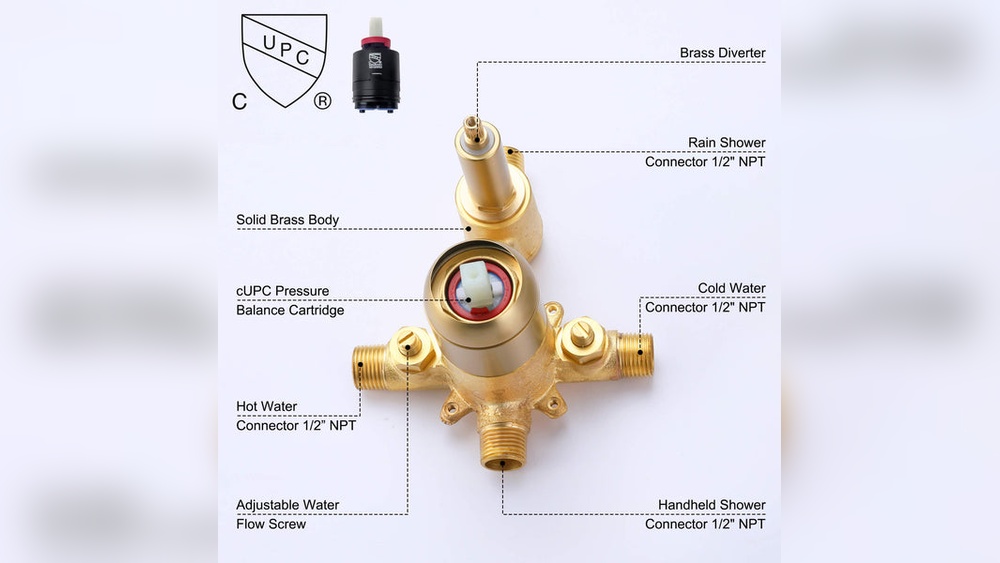
The valve is the heart of the shower faucet system. It’s hidden behind the wall and regulates water flow and temperature by mixing hot and cold water before sending it out. The valve is responsible for shutting off water and preventing leaks. There are several types of valves, which will be discussed in detail later.
3. Cartridge
The cartridge is a key part inside the valve. It moves when you turn the handle, controlling how much hot and cold water mix together. Cartridges can wear out over time, causing drips or temperature problems, but they are usually easy to replace.
4. Diverter
Some showers have a diverter, which is a switch or lever that directs water either to the tub spout or the showerhead. In a combined tub and shower setup, the diverter is essential for switching between a bath and a shower.
5. Showerhead
The showerhead is where the mixed water finally comes out. Showerheads can be simple or advanced, offering different spray patterns, water-saving features, or even LED lights.
6. Spout
In a tub and shower combo, the spout is where water comes out when filling the bathtub. The diverter is often part of the spout itself.
7. Trim Plate (escutcheon)
The trim plate covers the hole in the wall and gives the faucet a finished look. It also sometimes holds the handle(s) and hides the plumbing.
8. Pressure Balancer Or Thermostatic Control
Modern showers often include a pressure balancer or thermostatic control to keep water temperature steady, even when someone uses water elsewhere in the house.
How Water Flows Through A Shower Faucet
When you turn on your shower, you probably don’t think about what happens inside the wall. Here’s a step-by-step look at how water flows through a shower faucet:
1. Turning The Handle
You turn the handle or handles to the desired position. This action opens the valve inside the wall.
2. Mixing Water
The valve lets hot and cold water from your home’s pipes mix together. The amount of hot and cold that enters depends on how far you turn the handle(s).
3. Temperature Adjustment
The cartridge or valve adjusts the mix to reach your chosen temperature. Some advanced valves can keep the temperature steady even if water pressure changes.
4. Flow Direction
If you have a tub and shower combo, the diverter sends water to the showerhead or tub spout, depending on your choice.
5. Water Output
Water flows out of the showerhead (or tub spout), ready for use.
Key Insight: Many people don’t realize that the shower faucet doesn’t heat water itself. It only controls mixing and flow. The water is heated by your home’s water heater before it ever reaches the faucet.
Types Of Shower Faucet Valves
The valve is the most important part of any shower faucet. It determines how you control water and keeps your shower safe. There are several types of valves, each with its own advantages and drawbacks.
| Valve Type | Main Feature | Common Use |
|---|---|---|
| Compression Valve | Uses washers, two handles | Older homes |
| Cartridge Valve | Uses a sliding cartridge, one or two handles | Modern showers |
| Ball Valve | Uses a rotating ball, single handle | Some modern showers |
| Ceramic Disc Valve | Uses two ceramic discs, very durable | High-end or modern showers |
| Thermostatic Valve | Keeps temperature constant | Luxury or safety-focused showers |
| Pressure-Balancing Valve | Maintains pressure balance, prevents sudden temperature change | Modern code-compliant showers |
Compression Valve
The compression valve is one of the oldest types. It uses two handles (one for hot, one for cold) and rubber washers to stop and start water flow. When you turn a handle, you compress the washer against a valve seat to stop the water. This type is simple but can wear out and start leaking over time.
Cartridge Valve
Cartridge valves use a movable cartridge inside the body. Turning or moving the handle shifts the cartridge, mixing hot and cold water in the right amount. Cartridge valves are smooth, reliable, and often found in both single and double-handle faucets. They are easy to repair—just replace the cartridge if it wears out.
Ball Valve
Ball valves are usually found in single-handle faucets. A ball with holes controls both flow and temperature by rotating in different directions. These are more complex but give smooth control.
Ceramic Disc Valve
High-end showers often use ceramic disc valves. Two ceramic discs slide over each other to control water flow and temperature. This type is very durable and less likely to leak, but can be more expensive.
Thermostatic Valve
Thermostatic valves keep the water at a constant temperature, even if other people use water elsewhere in the house. If the cold supply drops, the valve automatically adjusts the hot water to prevent scalding.
Pressure-balancing Valve
Pressure-balancing valves protect against sudden changes in water pressure, like when someone flushes a toilet. They keep the water temperature steady by adjusting the mix instantly.
Non-Obvious Insight: In many countries, building codes now require pressure-balancing or thermostatic valves for safety, especially in homes with children or elderly people.
Types Of Shower Faucets
Shower faucets come in several styles. Each offers different benefits, and the best choice depends on your shower setup and personal preferences.
- Single-Handle Faucet: One handle controls both water flow and temperature. Simple to use, ideal for most modern showers.
- Double-Handle Faucet: Two handles—one for hot, one for cold. Common in older homes or classic designs.
- Triple-Handle Faucet: One handle for hot, one for cold, and one for diverter. Seen in some tub and shower combos.
- Thermostatic Faucet: Lets you set a specific temperature, which stays steady. Very safe and comfortable.
- Touchless Faucet: Uses sensors to turn water on and off. More common in commercial settings but starting to appear in homes.
Practical Example: If your shower suddenly becomes cold when someone flushes the toilet, you probably have an older compression or cartridge valve, not a pressure-balancing or thermostatic one.
How Mixing And Temperature Control Works
When you turn your shower handle, you are actually controlling the mix of hot and cold water entering the showerhead. The cartridge or valve inside responds to your adjustments.
- Single-Handle Faucets: Moving the handle left or right changes the temperature, while up or down (or forward/backward) changes the flow.
- Double-Handle Faucets: Turning one handle increases hot water, while the other increases cold. You find your preferred temperature by adjusting both.
Insider Tip: If you want very precise temperature control, look for a thermostatic valve. These are common in luxury showers and hotels.
Common Problems With Shower Faucets
Like all mechanical devices, shower faucets can develop problems over time. Understanding these issues can help you fix them quickly.
1. Dripping Or Leaking Faucet
A dripping shower faucet is usually caused by a worn-out cartridge, washer, or seal. Replacing the faulty part often solves the problem.
2. Difficult To Turn Handle
If the handle is hard to move, mineral buildup or a worn-out cartridge may be to blame. Cleaning or replacing these parts can restore smooth operation.
3. Inconsistent Water Temperature
Sudden temperature changes often mean the valve is not pressure-balanced or the cartridge is failing. Upgrading to a pressure-balancing or thermostatic valve can fix this.
4. Low Water Pressure
Clogged showerheads, mineral buildup, or a partially blocked valve can reduce water pressure. Cleaning or replacing affected parts usually helps.
5. Water Leaking Behind The Wall
This is a serious problem. A broken valve or poor installation can cause leaks inside the wall, leading to mold or structural damage. If you suspect this, call a professional plumber immediately.
Non-Obvious Insight: Many people overlook the importance of regular cleaning. Hard water can build up inside the shower faucet, making it harder to use and shortening its life.
How To Choose The Right Shower Faucet
Selecting a shower faucet is not just about style; it’s also about safety, comfort, and ease of use. Here are the key factors to consider:
- Valve Type: Choose a pressure-balancing or thermostatic valve for maximum comfort and safety.
- Handle Design: Single handles are easy for children and elderly people, while double handles offer classic style.
- Material: Brass and stainless steel last longer than plastic.
- Finish: Chrome is easy to clean; brushed nickel hides fingerprints; oil-rubbed bronze adds warmth.
- Compatibility: Make sure the new faucet fits your plumbing setup.
- Features: Consider options like water-saving, anti-scald, or touchless technology.
- Brand Reputation: Well-known brands often have better support and easier-to-find replacement parts.
- Budget: Higher-end valves cost more but often last longer and work better.
Common Mistake: Many buyers focus only on the look and forget about the valve inside the wall. Always check what’s included in the box.
Shower Faucet Installation Basics
While some people hire a plumber, others choose to install or replace a shower faucet themselves. Understanding the basics helps you decide if it’s a DIY project or if you need professional help.
Steps To Replace A Shower Faucet
- Turn Off Water Supply: Always shut off water before starting.
- Remove Old Faucet Trim: Unscrew and take off the handle and trim plate.
- Access the Valve: Sometimes you need to cut a hole in the wall to reach the valve.
- Remove Old Valve (if needed): Use a wrench to disconnect pipes.
- Install New Valve: Secure in place, making sure it’s level.
- Connect Water Lines: Attach hot and cold supply lines to the valve.
- Test for Leaks: Turn water back on and check for leaks.
- Attach Trim and Handle: Secure the trim plate and handle. Test operation.
- Seal Around Trim Plate: Use silicone to prevent water from entering the wall.
Safety Note: If you’re not comfortable working with plumbing, hire a licensed plumber. Mistakes can lead to leaks and expensive repairs.
Maintenance Tips For Long-lasting Shower Faucets
A shower faucet can last many years if you take care of it. Here’s how to keep yours working smoothly:
- Clean Regularly: Wipe handles and trim to prevent mineral buildup.
- Flush the Valve: If water flow drops, remove the showerhead and flush out the valve.
- Replace Cartridges/Seals: Fix drips quickly by replacing worn parts.
- Check for Leaks: Look for water stains or mold around the trim plate.
- Use Gentle Cleaners: Avoid harsh chemicals that can damage finish or seals.
- Operate Gently: Don’t force handles—if they’re hard to turn, find out why.
Expert Tip: Hard water can shorten the life of your shower faucet. Consider a water softener if you notice a lot of white or green buildup.

Credit: www.jacksonville.com
Shower Faucet Innovations And Trends
Modern shower faucets now offer features that make showers safer, more comfortable, and even eco-friendly.
1. Water-saving Technology
New shower faucets can use flow restrictors or aerators to limit water use without sacrificing pressure. This helps save money and the environment.
2. Digital Controls
Some systems let you set exact temperatures or even control your shower with a smartphone app. These are becoming more common in smart homes.
3. Anti-scald Protection
Thermostatic and pressure-balancing valves help prevent burns, a major safety improvement, especially for children and older adults.
4. Customizable Spray Patterns
Many modern showerheads offer multiple spray types—massage, rain, mist, and more—controlled by the faucet or a button.
5. Stylish Designs
Manufacturers now offer a wide range of finishes and shapes, so you can match your faucet to any bathroom style.
Environmental Impact And Water Efficiency
Showers are a major part of household water use. In the United States, the average shower uses about 17 gallons (65 liters) and lasts 8 minutes. Old showerheads can use up to 5 gallons (19 liters) per minute, but modern ones use 2.0 GPM (gallons per minute) or less.
A good shower faucet can help reduce water waste:
- Flow restrictors limit water use.
- Low-flow showerheads work best with compatible faucets.
- Eco-labels (like WaterSense) help you find efficient products.
Key Insight: In some regions, using water-saving faucets and showerheads is required by law.

Credit: www.angi.com
Comparing Shower Faucet Features
To help you pick the right shower faucet, here’s a comparison of popular features:
| Feature | Benefit | Ideal For |
|---|---|---|
| Pressure-Balancing Valve | Stable temperature, prevents scalds | Families, safety |
| Thermostatic Valve | Set exact temperature | Luxury, comfort |
| Touchless Control | Hygiene, convenience | Public places, tech lovers |
| Water-Saving Design | Lower bills, eco-friendly | Everyone, green homes |
| Custom Spray Patterns | Personalized shower | All users |
Safety Considerations For Shower Faucets
Safety is a top concern, especially in homes with children, elderly, or people with reduced mobility. Here’s what to watch for:
- Anti-Scald Features: Always choose a shower faucet with pressure-balancing or thermostatic protection.
- Smooth Handle Operation: Handles should turn easily, even for those with arthritis.
- No Sharp Edges: Trim and handles should be rounded or smooth to prevent injury.
- Proper Installation: Leaky valves can cause mold or rot in walls.
- Temperature Limits: Some valves have a max temperature stop—ask your plumber to set it for extra safety.
Non-Obvious Insight: Many injuries from hot water happen when kids or seniors use the shower. Investing in a good faucet with safety features is worth it.
Shower Faucet Troubleshooting Guide
When your shower faucet isn’t working right, quick diagnosis helps avoid bigger problems. Here’s a simple troubleshooting guide:
| Problem | Possible Cause | Solution |
|---|---|---|
| Dripping faucet | Worn cartridge or washer | Replace cartridge/washer |
| Handle hard to turn | Mineral buildup | Clean or replace cartridge |
| Sudden temp changes | No pressure-balancing valve | Upgrade valve |
| Low water pressure | Clogged showerhead | Clean or replace showerhead |
| Water behind wall | Valve leak or bad installation | Call plumber |
Frequently Asked Questions
How Does A Shower Faucet Mix Hot And Cold Water?
Inside the shower faucet, a valve or cartridge allows hot and cold water from separate pipes to blend. As you turn the handle, the cartridge shifts to let in more hot or cold water, adjusting the temperature that comes out of the showerhead.
Why Does My Shower Get Hot Or Cold When Someone Uses Water Elsewhere?
If you have a basic or old valve (like a compression or non-pressure-balancing type), changes in water pressure—like when someone flushes a toilet—can affect the mix inside your shower, causing sudden temperature shifts. Upgrading to a pressure-balancing or thermostatic valve prevents this.
How Often Should I Replace My Shower Faucet Or Its Parts?
Most shower faucet parts, especially cartridges and washers, can last 5–10 years or more. If you notice dripping, hard-to-turn handles, or temperature problems, it’s time to replace those parts. The main body of the faucet can last much longer if cared for properly.
Can I Install A New Shower Faucet Myself?
If you have basic plumbing skills and the right tools, you can install or replace a shower faucet. However, replacing the valve behind the wall is more advanced and may require professional help, especially if you need to cut and solder pipes. Always turn off the water before starting.
Where Can I Learn More About Shower Faucet Standards And Safety?
For deeper information on plumbing standards, water efficiency, and installation guidelines, visit the EPA WaterSense program, which offers resources on water-saving products and bathroom safety.
A well-chosen, properly installed shower faucet makes every shower safer, more comfortable, and more reliable. With a bit of knowledge, you can select, maintain, and even fix your own shower faucet, enjoying better performance and fewer surprises each day.

Credit: www.youtube.com