What Size Allen Wrench for Faucet Handle: Easy Guide
Every homeowner faces a leaky or loose faucet handle at some point. If you’ve ever tried to fix one yourself, you’ve probably met a tiny screw hiding under a cap or handle. That screw almost always needs an Allen wrench—also called a hex key.
But which size Allen wrench should you use for a faucet handle? Choosing the wrong size can strip the screw or damage your faucet. This guide explains everything you need to know about finding the right Allen wrench for faucet handles, with step-by-step advice, examples, and helpful comparisons.
Why Allen Wrenches Are Used For Faucet Handles
Allen wrenches fit into screws with a hexagonal (six-sided) recess. Many faucet handles use these screws because they hold tightly and are less likely to slip than Phillips or flathead screws. Plumbing brands prefer hex screws for their clean look and secure grip. The small size fits well under faucet caps and does not stick out.
Using the correct Allen wrench size keeps the screw head in good condition. If you use a tool that’s too small, it slips and damages the screw. If the tool is too large, it won’t fit at all. That’s why knowing the right size is so important.
Common Allen Wrench Sizes For Faucet Handles
Most faucet handles use Allen screws between 1/16 inch and 1/8 inch. The exact size depends on the brand and faucet style.
Here are the most common sizes:
- 1/8 inch (0.125″) – Used in many American faucets, especially older models.
- 3/32 inch (0.09375″) – Very common for modern faucets, especially single-handle types.
- 5/64 inch (0.078125″) – Found in some imported or designer faucets.
- 2.5 mm – Common in European and some Asian faucet brands.
- 2 mm – Sometimes used in slim or mini faucets.
Most homeowners find that either 3/32 inch or 1/8 inch Allen wrenches fit their faucet handle. However, it’s smart to have a small set on hand, as some brands use less common sizes.
How To Identify The Correct Allen Wrench Size
Finding the right size doesn’t have to be a guessing game. Here’s a practical way to do it:
- Look for the Set Screw: Most faucet handle screws are hidden under a decorative cap. Use a flathead screwdriver or your fingernail to gently pop off the cap.
- Examine the Screw: Check the screw head. If it looks like a hexagon, you need an Allen wrench. If it’s a cross or straight line, you need a different tool.
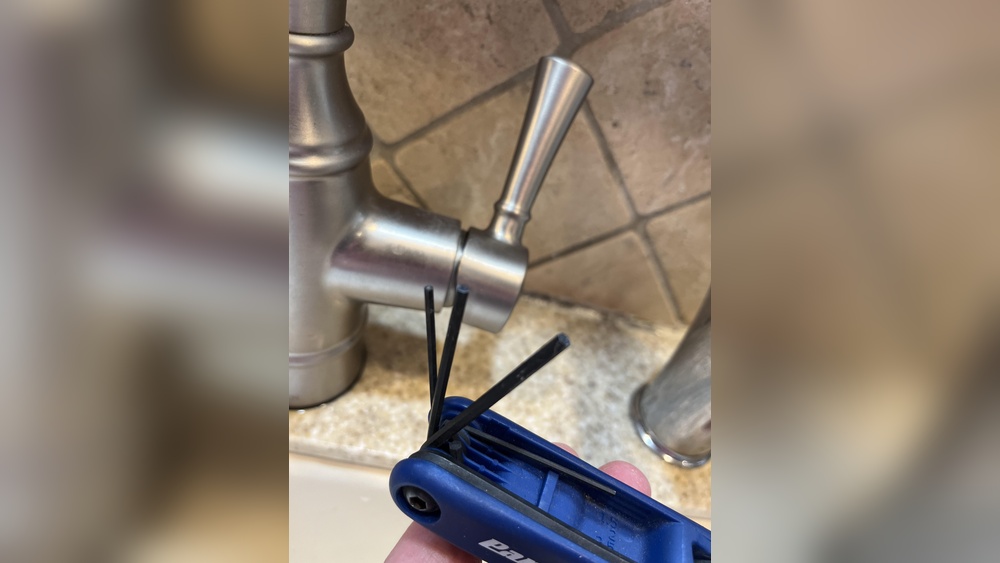
- Test Fit: Start with a 3/32 inch Allen wrench. Insert it into the screw head. If it fits snugly, it’s the right size. If it wiggles, try the next larger size. Never force a wrench into the screw.
- Metric vs. Imperial: Some faucets (especially imported ones) use metric sizes. If none of your inch-based wrenches fit, try a 2 mm or 2.5 mm wrench.
- Try a Complete Set: If you’re unsure, use a folding Allen wrench set. Try each size until you find the one that fits perfectly with no looseness.
Here’s a quick comparison of common sizes and where they are often used:
| Allen Wrench Size | Common Faucet Brands | Typical Use |
|---|---|---|
| 1/8 inch | Moen, Delta, Kohler (older) | Bathroom, kitchen, tub handles |
| 3/32 inch | Moen, Delta, Peerless (modern) | Single-handle faucets |
| 5/64 inch | Grohe, Hansgrohe | Designer, imported faucets |
| 2.5 mm | Roca, Blanco | European brands |
| 2 mm | Generic, IKEA | Mini or slim faucets |
How To Remove A Faucet Handle With An Allen Wrench
Removing a faucet handle is simple if you have the right tool. Follow these steps for a smooth experience:
- Turn Off the Water: Always shut off the water supply before working on a faucet. Look under the sink for shut-off valves.
- Protect Your Sink: Place a towel in the sink. Small screws can fall and disappear down the drain.
- Find the Set Screw: Most faucet handles have a small round cap. Pry it off gently with a flathead screwdriver.
- Select the Allen Wrench: Use the size guide above. Insert the wrench into the screw and turn counterclockwise.
- Loosen the Screw: Turn slowly. If the screw feels stuck, spray a bit of penetrating oil and wait a few minutes.
- Remove the Handle: Once the screw is out, gently lift the handle off the faucet stem.
Tips For A Safe And Easy Removal
- Do not force the Allen wrench. If it doesn’t fit, try the next size.
- If the screw is rusty or stuck, apply a small amount of penetrating oil and let it sit.
- Keep a magnet handy to pick up dropped screws.
How Allen Wrench Sizes Compare To Other Tools
Why not use a Phillips or flathead screwdriver instead? Here’s how Allen wrenches stand out:
| Tool Type | Typical Use | Pros | Cons |
|---|---|---|---|
| Allen Wrench | Faucet handles, furniture assembly | No slippage, fits small spaces | Requires exact size, easy to lose |
| Phillips Screwdriver | Electronics, appliances | Common, easy to use | Can slip, not used in most faucets |
| Flathead Screwdriver | Older hardware, prying caps | Versatile, simple | Slips easily, damages soft screws |
Allen wrenches are the best fit for most faucet handles because they grip without slipping and fit into tight spaces.
Allen Wrench Sets: A Smart Investment
One of the most useful purchases for any homeowner is a complete Allen wrench set. Here’s why:
- Variety: A set includes all common sizes (1/16″, 5/64″, 3/32″, 1/8″, and metric sizes).
- Organization: Folding sets keep tools together, so you don’t lose small wrenches.
- Cost-Effective: Most sets cost less than a plumber’s service call.
- Versatility: Allen wrenches are used in furniture, bikes, door handles, and more.
Look for sets with both inch and metric sizes. Some brands color-code their wrenches, making it easy to find the right one quickly.

Credit: www.deltafaucet.com
Matching Allen Wrench Size With Faucet Brands
Not all faucet brands use the same screw size. Some companies are consistent, while others change screw sizes between models.
Here’s a quick reference for common brands:
- Moen: Most use 3/32″ or 7/64″. Some older models use 1/8″.
- Delta: Usually 1/8″ or 3/32″.
- Kohler: Often 3/32″, but some use 1/8″ (especially in older products).
- Grohe/Hansgrohe: Metric sizes, often 2.5 mm.
- Pfister: 3/32″ or 2.5 mm.
Always double-check with your faucet’s manual if possible. If you don’t have the manual, test fit the wrenches starting with the most common sizes.
What Happens If You Use The Wrong Size Allen Wrench?
Using the wrong size can cause several problems:
- Stripped Screw Head: The wrench slips and rounds out the hex hole, making removal difficult.
- Damaged Handle: Forcing the wrong size can crack or bend the handle.
- Stuck Screw: A damaged screw may get stuck, requiring special removal tools.
If you accidentally strip a screw, try these steps:
- Tap the Allen wrench gently into the screw to improve grip.
- Use a small flathead screwdriver to turn the screw.
- If stuck, use a screw extractor kit.
Never force a wrench that doesn’t fit. It’s better to stop and find the correct size.

Credit: www.reddit.com
Replacing A Faucet Handle: Do You Need A Special Allen Wrench?
For most faucet repairs, a regular Allen wrench from a hardware store works fine. You do not need a special tool. However, some designer or imported faucets use unique sizes. In rare cases, the manufacturer provides a custom wrench with the faucet.
Keep this tool if you have it—it can be hard to replace.
If you lose the special wrench, contact the faucet maker or visit their website. Some companies sell replacement tools.
Practical Examples: Real-world Faucet Handle Repairs
Let’s look at a few common scenarios:
Example 1: Loose Kitchen Faucet Handle
Your Moen kitchen faucet handle is loose. You pop off the cap and see a hex screw. You try a 1/8″ wrench—too big. Next, you try 3/32″—it fits perfectly. You tighten the screw, and the handle is secure.
Example 2: Bathroom Faucet Drip
A Delta bathroom faucet drips. You remove the handle cap and find a 2. 5 mm hex screw. Your inch-sized wrenches don’t fit. You switch to metric, and the 2. 5 mm Allen wrench works. After removing the handle, you replace the worn cartridge and reassemble the faucet.
Example 3: Designer Faucet
You bought a European designer faucet. The handle uses a very small screw. None of your inch or metric wrenches fit. You check the faucet box and find a tiny custom Allen wrench included. This tool is the only one that works for this screw.
These examples show why having a complete set of Allen wrenches (inch and metric) is helpful.
Common Mistakes When Using Allen Wrenches On Faucet Handles
Even experienced DIYers make mistakes. Here are some common errors and how to avoid them:
- Using the Wrong Size: Always check fit before turning the wrench.
- Over-Tightening: Tighten just enough to secure the handle. Too much force can crack the handle or strip the screw.
- Losing the Set Screw: These screws are tiny. Work over a towel to catch any dropped parts.
- Not Turning Off Water: If you remove the handle without shutting off water, you risk leaks or sudden sprays.
- Skipping Lubrication: For stuck screws, a drop of oil can save time and prevent damage.
Allen Wrench Materials: Do They Matter?
Allen wrenches come in different materials:
- Carbon Steel: Most common, affordable, but can rust if left wet.
- Chrome-Vanadium Steel: Stronger, resists bending and breaking, less likely to rust.
- Stainless Steel: Best for wet environments, won’t corrode, but often more expensive.
- Coated Wrenches: Some are coated with black oxide or nickel for extra protection.
For bathroom or kitchen work, chrome-vanadium or stainless steel wrenches last longer. Basic carbon steel works for occasional repairs but keep them dry.
Should You Buy Individual Wrenches Or A Set?
If you only need to fix one faucet, buying a single Allen wrench is cheaper. But faucet screws come in several sizes. Buying a set is smarter because:
- You’re prepared for different jobs.
- You won’t have to run back to the store.
- A set costs only a little more than one or two single wrenches.
A folding Allen wrench set is handy and portable. Some sets are keychain-sized for convenience.
Allen Wrench Storage And Organization
Small tools get lost easily. Here’s how to keep your Allen wrenches in good shape:
- Store them in the original holder or pouch.
- Use a magnetic strip or pegboard in your workshop.
- Keep a set in your kitchen or bathroom drawer for quick repairs.
Organization means you’ll always have the right size when you need it.
When To Call A Plumber
Most faucet handle repairs are simple. But if you face these problems, call a plumber:
- The screw is stripped and won’t turn.
- The handle is stuck or damaged.
- There is water leaking from under the handle.
- You are unsure about shutting off water or reassembling the faucet.
A plumber has special tools for stubborn screws and can prevent further damage.
Allen Wrench Sizes: Metric Vs. Inch For Faucet Handles
Some faucets use metric screws, others use inch sizes. Here’s a comparison for quick reference:
| Inch Size | Closest Metric Size | Fit in Faucet Handles? |
|---|---|---|
| 1/8″ | 3.0 mm | Sometimes |
| 3/32″ | 2.5 mm | Often |
| 5/64″ | 2.0 mm | Occasionally |
Metric wrenches sometimes fit inch screws, but not always perfectly. Using the closest size usually works, but if you feel looseness, try the next size up or down.

Credit: www.youtube.com
Where To Buy Allen Wrenches For Faucet Handles
You can find Allen wrenches almost anywhere:
- Hardware stores (Home Depot, Lowe’s)
- Online retailers (Amazon, eBay)
- Plumbing supply stores
- Some large supermarkets
If you want a reliable set, look for brands like Bondhus, Wiha, or Craftsman. For more information on Allen wrenches and hex keys, check the Wikipedia article on Hex Keys.
Non-obvious Insights For Beginners
Many beginners miss these points:
- Screws May Be Hidden: Some faucet handles hide the screw under a logo or decorative button. Always check for these before forcing the handle.
- Screws Aren’t Always on the Side: Some faucet handles have the set screw underneath the handle or at the back—use a flashlight to check all sides.
- Not All Faucets Use Allen Screws: Some older or budget faucets use Phillips or flathead screws. Don’t assume every handle needs an Allen wrench.
Simple Maintenance Tips For Faucet Handles
To avoid future problems:
- Tighten the set screw if the handle feels loose—don’t wait for it to fall off.
- Remove mineral buildup with vinegar if the handle sticks.
- Use a small brush to clean around the screw hole when the handle is off.
- Lubricate the screw lightly to prevent rust.
Regular maintenance means fewer surprises and easier repairs.
Frequently Asked Questions
What Is The Most Common Allen Wrench Size For Faucet Handles?
The 3/32 inch Allen wrench is the most common size for modern faucet handles, especially for brands like Moen and Delta. Older faucets may use a 1/8 inch wrench, while some European brands use 2.5 mm.
Can I Use A Metric Allen Wrench Instead Of An Inch Size?
Yes, if the metric wrench fits snugly. For example, a 2.5 mm wrench is very close to 3/32 inch. Always test fit before turning to avoid stripping the screw.
What If My Allen Wrench Keeps Slipping In The Screw?
If the wrench slips, it’s likely the wrong size or the screw head is stripped. Try the next larger size or gently tap the wrench into the screw. If it still slips, you may need a screw extractor.
Where Is The Set Screw Usually Located On A Faucet Handle?
Most faucet handles hide the set screw under a small round cap or button, often on the side or underneath the handle. Use a flathead screwdriver or fingernail to lift the cap and expose the screw.
Do I Need To Turn Off The Water To Tighten A Loose Faucet Handle?
It’s best to turn off the water, especially if you plan to remove the handle. For simple tightening, you can usually leave the water on, but be careful not to loosen the screw too much.
A little knowledge and the right Allen wrench make faucet handle repairs quick and stress-free. With a good Allen wrench set, you’ll be ready for almost any handle repair in your home.